Site will be
unavailable for maintenance from June. 4, 11:30 p.m., to June 5, 12:30 a.m. ET. Thank you for your
patience!

A year after the Indonesia earthquake, Siti can’t be shaken
Posted on 12/13/2019
A year after the Indonesia earthquake, Siti can’t be shaken
Siti Mutmainah is one tough lady. A survivor of the Indonesia earthquake and tsunami that devastated Central Sulawesi on September 28, 2018, the mom of three refused to lose heart after her home and livelihood were destroyed in the disaster.
The Indonesia earthquake shattered her family’s lives
Siti and her family used to live near the beach in Central Sulawesi, where they owned a furniture manufacturing business and a small fishing pond. All were wiped away by the waves of the tsunami, and the family was forced to move to a crowded refugee settlement.
In Indonesia, humanitarian emergencies are common. According to the Global Facility for Disaster Reduction and Recovery, the country is one of the world’s most natural disaster-prone areas and is at risk to multiple hazards, including flooding, earthquakes, landslides, tsunami, volcano and cyclone. Over the last 30 years, there have been an average of 289 significant natural disasters per year and an average annual death toll of approximately 8,000.
Siti and her family felt lucky to survive the Indonesia earthquake. But after the initial disaster had passed, they felt hopeless. With her businesses destroyed, they had no income to speak of and no plans for the future.
Moving on: Siti turns a humanitarian emergency into an opportunity
After a few months, Siti felt her mourning slowly transforming into a desire to rebuild. She says it was her responsibility to provide for her youngest child’s college education that motivated her most. With her other two children already grown up and self-sufficient, her concern for her littlest one’s future renewed her entrepreneurial spirit.
She decided to open a small snack shop for the other refugees.
“I needed to move on with my life,” Siti insists. “I do not need to stay stuck in my losses from the past.”
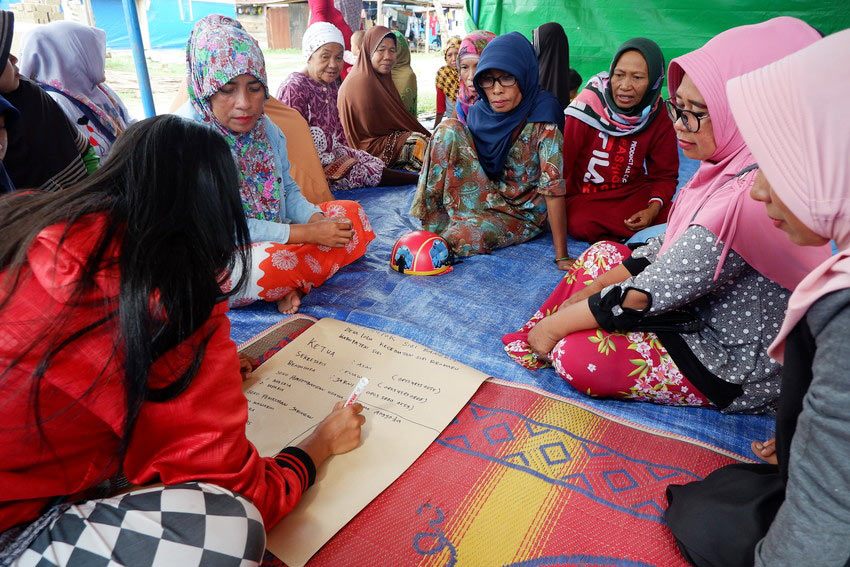
That’s one reason why she’s thankful for ChildFund, which is working to help 556 women and their families in Central Sulawesi recover their lives and livelihoods.
ChildFund’s humanitarian emergency response for children and families
ChildFund and their partners are now providing Siti’s shop with extra capital so it can offer a larger, more enticing menu, which has boosted sales. They’ve also given her special training in business management.
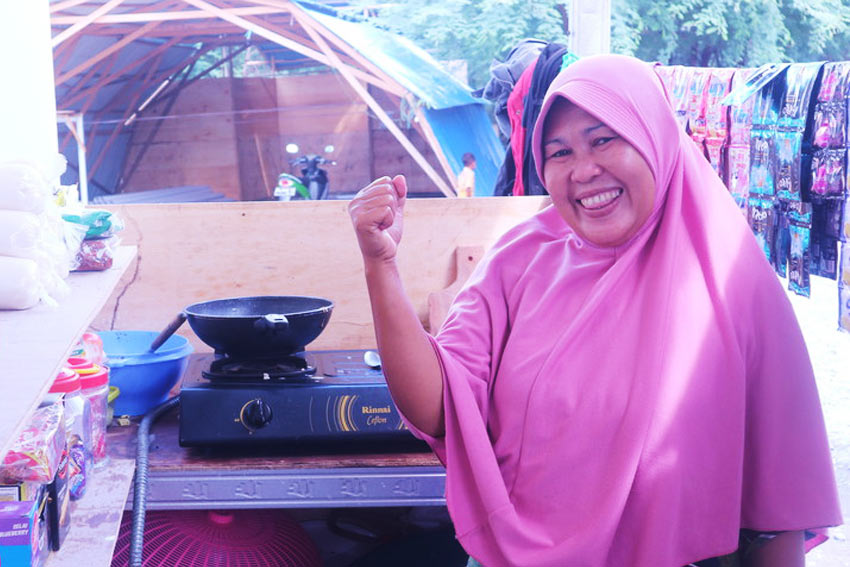
If you visit the shop now, you’ll find an assortment of drinks, salty snacks and sweets, as well as a variety of hot food that she cooks herself. Siti admits that the income it provides isn’t very much. But it’s better than nothing, and it makes her feel hopeful for a better future.
“Before the disaster, many women had businesses,” says Iwan Setyoko, who works for ChildFund’s local partner organization that implements the program. “Now, they can’t open businesses because they don’t have assets or capital.” The program aims to jump-start the local economy by giving women – and, by proxy, their children – a leg up in the recovery process.
And that’s not the only way that ChildFund provides emergency response for children. We provide relief in the form of essentials like food, blankets and basic household supplies. We set up Child-Centered Spaces – safe zones where kids can go to play and learn under the supervision of trained, caring staff while their parents rebuild their lives. We also promote education on disaster preparedness so that when emergencies happen, children, families and communities know how to respond and can recover more quickly.
Hope after the Indonesia earthquake
Today, over a year after the Indonesia earthquake and tsunami, Siti and her family live in a temporary shelter provided by the government, and she’s still running the same little shop.
“I hope to learn how to run a business in a better way,” Siti says. “This is how I’m preparing for my dream: to reopen my furniture shop and fish pond when the opportunity comes again.”
If you want to help families just like Siti’s find hope after a humanitarian emergency, there’s a way. Donate to help children and families affected by emergencies through our Emergency Fund. Or sponsor a child in Indonesia or another disaster-prone country.
Loading...