Site will be
unavailable for maintenance from June. 4, 11:30 p.m., to June 5, 12:30 a.m. ET. Thank you for your
patience!
5 kinds of education you didn't know the world needed
Posted on 01/24/2025
Learning isn’t something that ends when you finish school: It’s a lifelong process. Just ask Debora, a farmer and mom in rural Indonesia.
By the time Debora’s seventh child and only daughter, Maria, was born, she was already well-versed in raising children. Even so, when Maria was diagnosed with severe malnutrition, Debora knew she still had plenty to learn.
“I felt hopeless. At that time, I was hoping Maria would survive,” she remembers. “Another child in the village had just died because of malnutrition.”
Debora decided to take charge of the situation and join ChildFund’s responsive parenting classes to help improve Maria’s health. Today, Maria is on the road to recovery, and Debora has learned so much – not only how to cook healthy, nutritious meals with ingredients that grow in her own garden, but also how to improve her relationship with Maria through play and communication.
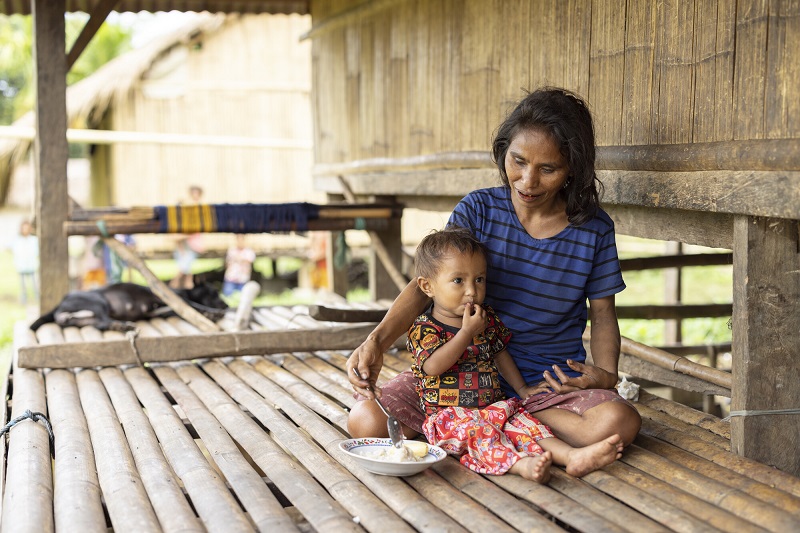
Debora and her daughter Maria, 2, in East Nusa Tenggara, Indonesia.
“I want to continue to go to these parenting classes until Maria grows up,” says Mom. “Maria looks so much happier than my older children. I wish I’d had that knowledge earlier in life.”
Knowledge is power, after all, and we’re all constantly learning from each other – children, families and ChildFund staff alike. Read on to learn more about five types of education we provide that go beyond your typical reading, writing and math (but are just as important for children’s well-being).
Parenting education
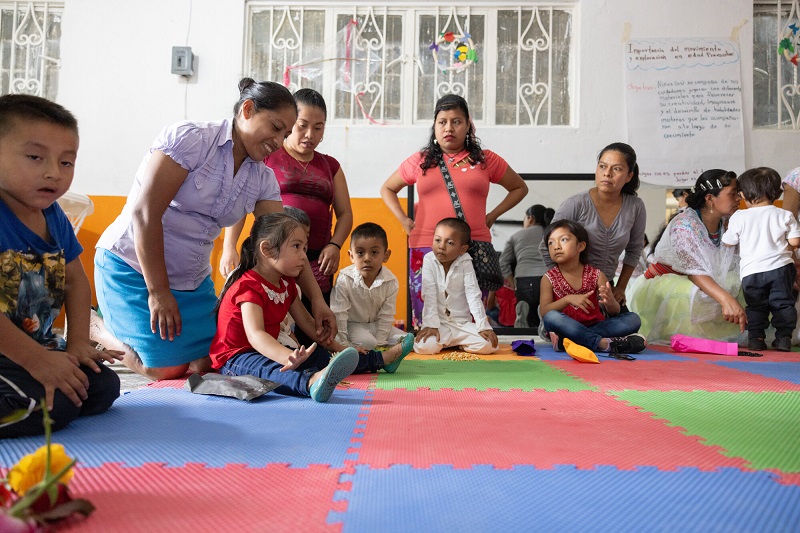
Parents and children play together at a ChildFund workshop as part of our Juega Conmigo (Come Play with Me) project in Sierra Norte de Puebla, Mexico.
Especially when children are young, one of the most important ways we can care for them is to bolster their parents’ knowledge about how children best grow and develop. ChildFund’s responsive parenting programs around the world do just that, bringing parents and caregivers together in supportive community workshops to learn not just about child nutrition, health and other basics, but also about the importance of play and positive discipline, rather than corporal punishment, to a child’s development.
Jonsaba, a mother of young kids in The Gambia who used to hit her children when they made mistakes, says that ChildFund responsive parenting workshops have been a game-changer in her community. “We are now closer to the children, both mothers and fathers,” she says. “I have stopped beating them. We are communicating with them using our new skills.”
Education for protection
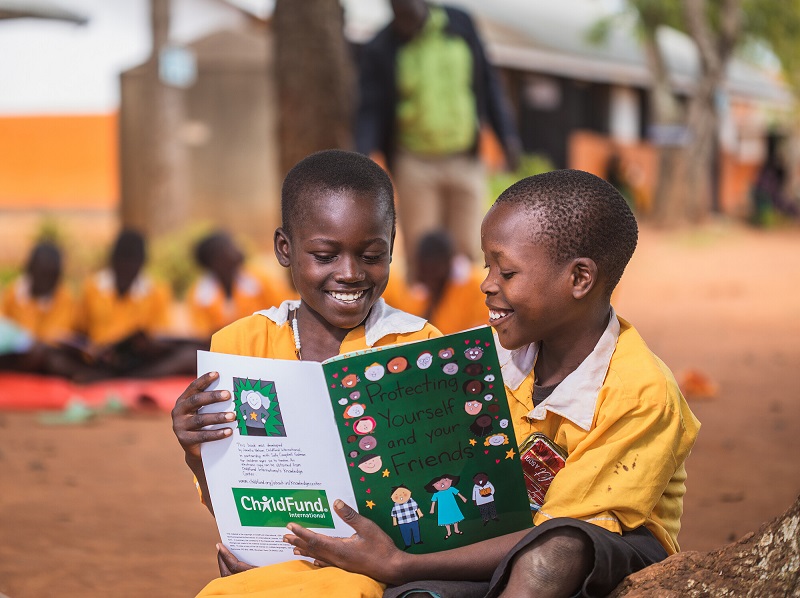
Friends in Uganda share a copy of “Protecting Yourself and Your Friends,” ChildFund’s comic book to teach kids about their right to protection from violence.
If a child has never learned about abuse, how will they know what abuse is? That’s the idea behind ChildFund’s Education for Protection and Well-being program, which we operate in schools throughout Sri Lanka, Sierra Leone, Uganda, The Gambia, Indonesia and the Philippines. The program takes a holistic approach to violence prevention and reporting, deepening education for parents, teachers and children alike on how to foster healthy relationships wherever kids are – at home, at school, out in the community and, yes, even online. In fact, one of ChildFund’s global priorities is to reduce rates of violence against children online, and preventive education is a critical part of this.
In general, when children know how to clearly identify and speak out against violence, they’re much more likely to report it – and increased rates of reporting at the community level drive prevention. Yureni, 11, who participates in a ChildFund antiviolence education program in Mexico, sums it up this way: “What I’ve learned is that nobody can touch my body without my consent. Nobody can tell me to do something that I don’t want to do, because it’s my body, and I know best about what to do with it.
“If somebody threatens me to do something I don’t want to do and tells me, ‘If you don’t do this, I’ll do something to you or to your family,’ I should tell my mother, my father, my family members or my teacher. If I’m being bullied, I should tell my mother or my teacher so those things don’t continue to happen to me or to my classmates.”
Environmental education
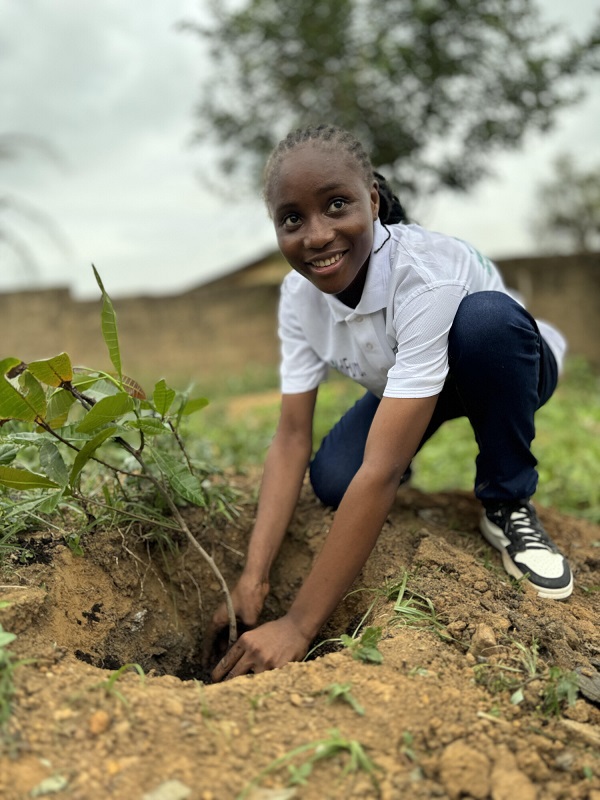
A youth participant in ChildFund Sierra Leone’s 2024 World Environment Day celebrations plants a tree in her community.
We’re all born as parts of our larger environment, but we’re not born knowing how to care for the natural resources around us. Given that lower- and middle-income countries are often more vulnerable to natural disasters – and that children and youth will live through more and more of these impacts as they grow – ChildFund creates opportunities to deepen environmental education in schools and involve young people in discussions around environmental protection and building sustainability.
In the Philippines, for instance, where shifting weather patterns are causing seasonal storms to become more and more intense and unpredictable, our Project Greenlight program uses a classroom-to-forest approach to engage students in taking a more active role in environmental conservation. In drought-prone Kenya, our Regreening Africa project, launched in partnership with Dow, is advancing environmental education in schools as well as supporting youth and women with a unique way to earn a more sustainable livelihood – by planting climate-resilient tree nurseries and selling the fruit they produce.
Wherever possible, we’re also passing the mic to children and youth at high-level global events that address sustainability. After all, they’re the ones who will, quite literally, inherit the earth.
Sexual & reproductive health education
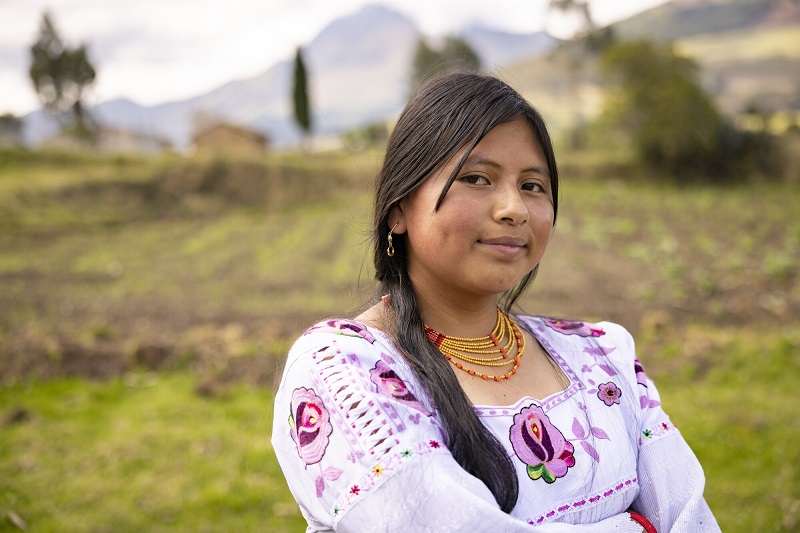
“I think the greatest challenge [in our community] is early pregnancy,” says Cynthia, 15, in Ecuador. “Many girls are getting pregnant and then can’t continue with school. ChildFund has some workshops related to sexual health, and I’m now participating. We’ve learned about sexuality and gender and how to avoid pregnancy before you’re ready.”
Remember the ups and downs of puberty? If you’re like many of us, the physical and emotional transition from child to adult was a confusing, exciting, often painful time, filled with questions – and not many places to turn to for answers. That’s why ChildFund helps bring basic sexual and reproductive health education to many communities where this is a gap in education. Our programs are designed to help young people understand how their changing bodies work, curb rates of teen pregnancy and support youth to make empowered decisions about their health.
In Senegal, where it is often taboo to talk about menstruation, our Projet d’Amélioration de la Santé Adolescents et Jeunes (PASSAJE) project established 32 health counseling centers in 16 schools, and also built separate girls’ restrooms for girls to tend to their menstrual health. Josephine, a teacher at one of the schools, says, “It has been very resourceful because before this project started, [girls] did not have a safe and private space to talk about their personal problems. When they come here, I not only teach them about menstrual hygiene, but also about other very important topics to do with girls’ health. These include sexual abstinence, embracing positive values and body positivity, as well as good nutrition and healthy eating habits.”
Skills development
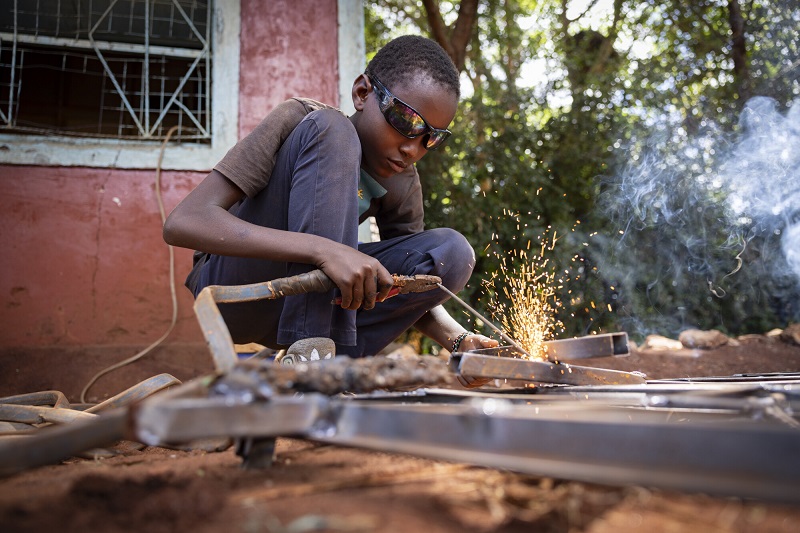
Mutunga, a sponsored 16-year-old in ChildFund Kenya’s programs, received a scholarship from ChildFund so he could learn welding.
We all know how important it is for young people to get not just an academic education, but a practical education – especially as they prepare to enter the workforce. Even so, only around 1 in 4 young people in the world are on track to learn the skills they need for gainful employment.
ChildFund supports skills development and vocational training programs around the world and awards scholarships to youth who may not have the means to obtain higher education. We also operate youth clubs and other programs that help young people build confidence, leadership skills and a sense of responsibility. We know that when youth experience the power of their own voices, they can drive positive change in their communities – as Aissatou, 20, in Senegal, has learned firsthand.
“I was so timid. I was so shy. But [ChildFund’s youth club] has allowed me to be more outgoing and do something for my community,” she says.
“The leadership training has been good for me. I can communicate so much better, and I’ve met so many people. If it weren’t for this club, the youth would never get together. We’d never talk about our problems and be able to freely discuss our issues in the community.”
Education can take many forms, but it’s clear that it’s one of the most powerful ways to build children up – especially when we think outside the box about what it means. What kinds of education do you wish you’d had better access to growing up?
Loading...
