Site will be
unavailable for maintenance from June. 4, 11:30 p.m., to June 5, 12:30 a.m. ET. Thank you for your
patience!

Muddy hands, full hearts: The power of nature in childhood and beyond
Posted on 06/05/2025
At ChildFund, we sometimes say, “What we pay attention to grows.” We embody this thought by not only helping communities build their own sustainable resilience, but also by mainstreaming environmental care and adaptative action across everything we do, whether it’s an emergency response, a health or educational initiative, livelihood support or even the running of our own offices.
We asked some of our colleagues who lead sustainability efforts at ChildFund — and who hail from all corners of the world — to share their early experiences with nature, how it informs their work today, and what needs to happen for today’s children to experience the abundant, diverse, clean, beautiful world that their future depends on.
Take us back to an early, memorable experience of nature.
Poonam Mishra, India
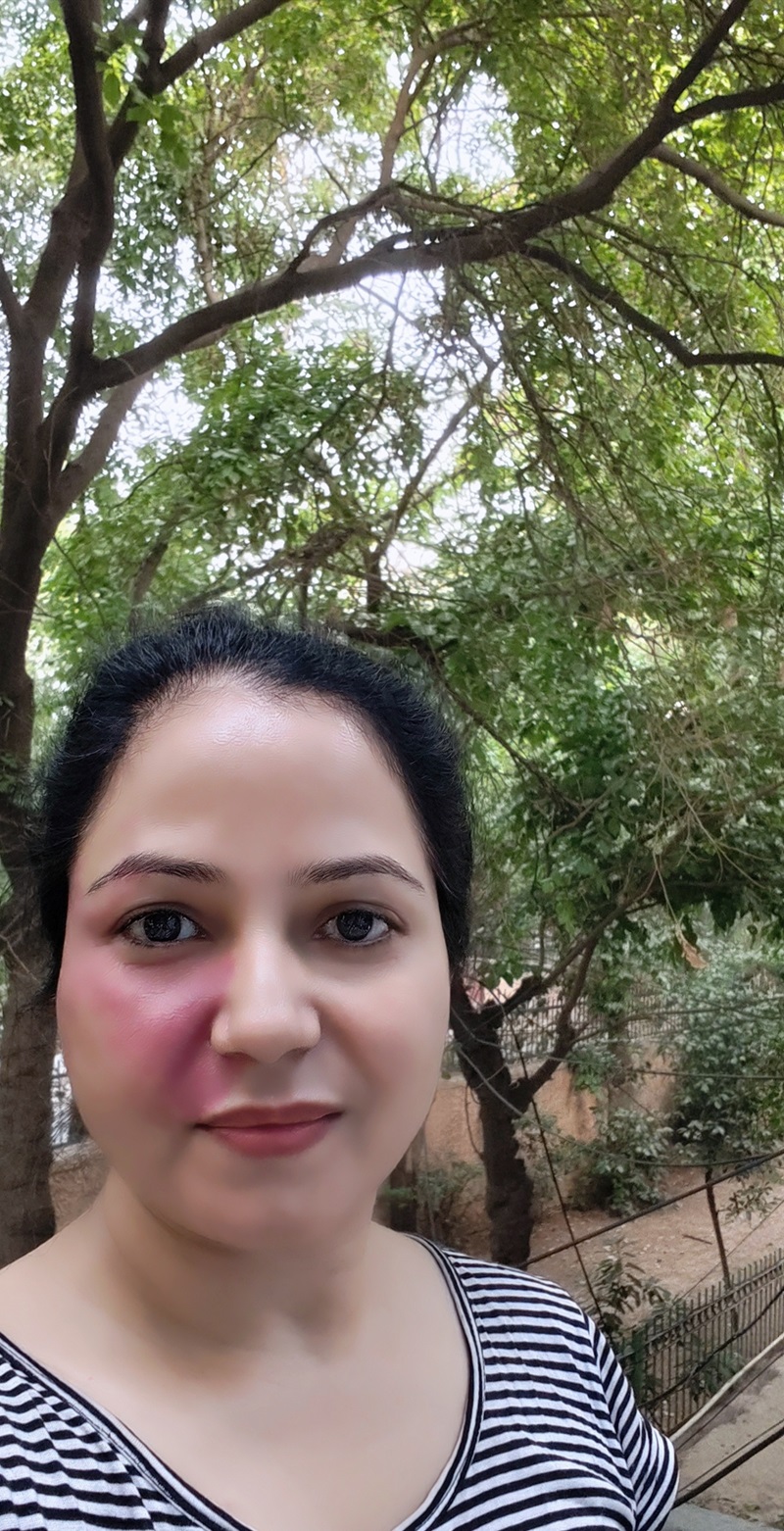 Poonam enjoys some green space in her New Delhi neighborhood. She leads ChildFund’s sustainability and resilience programming in India.
I completed my secondary school education outside of my hometown, in Leh, in the Jammu and Kashmir region of India — a place often referred to as heaven on Earth. The chilly winters, captivating summers, steep hills, lush green pastures, the Indus River, abundant springs, and apple and apricot trees created unforgettable memories of that time.
I still remember the Sundays I spent visiting the homes of my friends who lived in this community. I enjoyed meals with them, strolled through the pasturelands, and spent hours gazing at the hills, the barren, layered rocks, and the meandering Indus River, often running across the small overbridge that spanned it. While exploring, we would pluck apples or apricots straight from the trees and savor their sweet flavors. My friends had kitchen gardens brimming with seasonal vegetables and greens, and I even witnessed the use of greenhouses for the first time. I cherish the wonderful moments I experienced in nature to this day. I have always felt a deep connection to lush greenery and serenity, which bring me peace. Throughout my studies, I typically immersed myself in nature and spent quality time alone, which always brought me comfort and transformation.
Ong’idi Kevin Otieno, Kenya
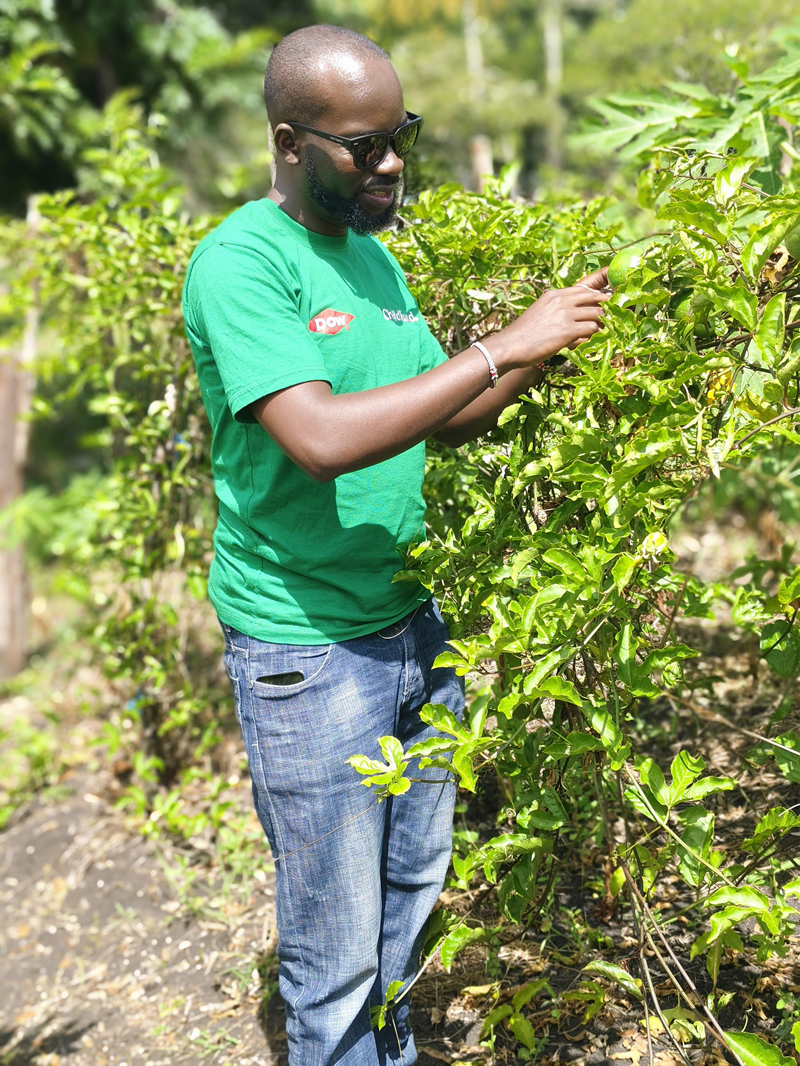 Kevin examines a passionfruit plant. He manages ChildFund's food security, livelihood and environmental adaptation work in Kenya.
I grew up in the sugarcane-growing zones of Western Kenya. One of the most vivid memories I carry dates to when I was in second grade. This was during the mid-1990s, when 4K Clubs were an integral part of school life across Kenya. The term 4K stood for "Kuungana, Kufanya, Kusaidia Kenya," a powerful Kiswahili slogan meaning "Coming together, to act, to help Kenya."
Through the 4K Club, we learned how to grow crops, raise small animals like rabbits and chickens, and take care of kitchen gardens and tree nurseries. The food we produced often supported school feeding programs; some we took back home to our parents or even sold to fund school activities like buying refreshments for students during school competition games. We each had small 2-by-2-meter plots that we proudly called our farms, little pieces of land where our passion for agriculture took root, quite literally.
One unforgettable experience was during an environmental celebration day when our school was hosting the Provincial Commissioner for Nyanza, Mr. Raburu. After several speeches by the school head boy, teachers, parents, government officers and Mr. Raburu, the tree planting exercise finally began. Every student was assigned to plant trees around the school compound. At the far end of the field, we also helped establish a small school forest.
What made that day so memorable for me was the sheer energy and excitement among us students. We turned the tree-planting into a competition, each of us racing to plant as many seedlings as possible. In my eagerness, I remember, I fell multiple times, scraping my knees, but I kept going. The teacher on duty helped tend to my bruises, yet I could not be stopped — I was determined to plant more trees.
By the end of the day, our hands were muddy, our uniforms dusty, but our hearts full. As a reward, we were treated to ripe mangoes from the school orchard, a treat we always looked forward to on such days. It was not just about the mangoes, though; it was the sense of purpose, of belonging, and the joy of doing something meaningful for our school and our environment that made those moments so special.
Erwin Peter Galido, the Philippines
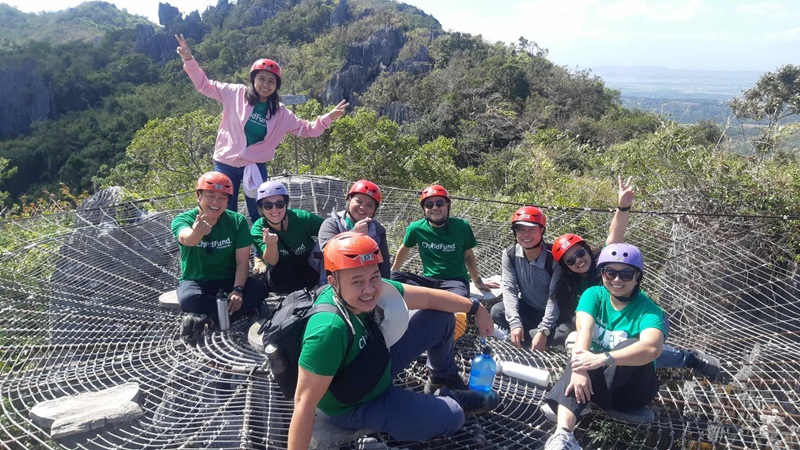 Erwin front and center with ChildFund Philippines colleagues at the Masungi Georeserve outside of Manila, Philippines. He is our Philippines office focal point for disaster risk management and sustainability and resilience programs.
One of the most memorable experiences of my childhood was visiting a butterfly sanctuary and garden near our home. What made this sanctuary truly special was that it was completely open — no nets, no enclosures. Butterflies came and went freely, drawn by the incredible diversity of native food plants that thrived there.
This sanctuary was the vision of a renowned local explorer and naturalist, whose work deeply influenced our community. Growing up with frequent visits to this place, I learned early on how nature flourishes best when left to its own wisdom. I began to understand the intricate web of life — how everything in nature is interconnected.
Keeva Duffey, U.S. (but lives in Saudi Arabia)
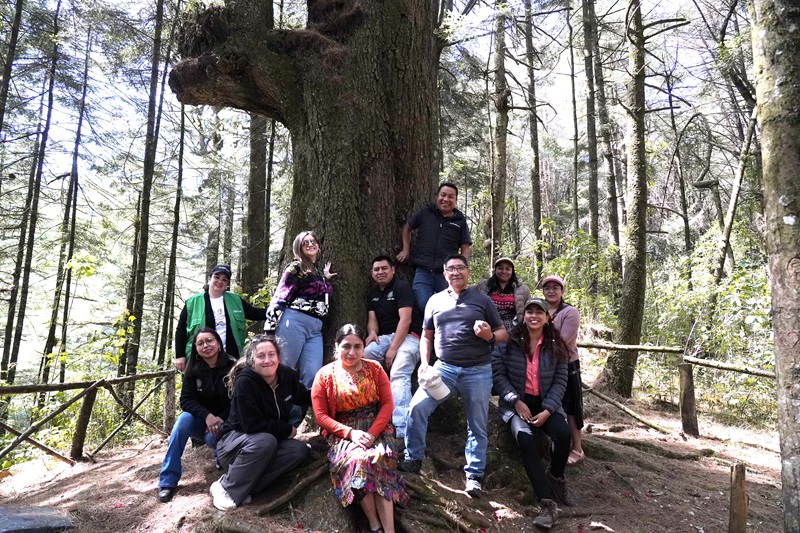 Keeva Duffey (second from left in front) at El Aprisco eco-park with local partner organization and ChildFund Guatemala colleagues. Keeva is ChildFund's global senior advisor for sustainability.
I grew up in a rural mountainous region in the Pacific Northwest of the United States. All my childhood memories revolve around nature and the seasons — for example, summers on the edge of the Rocky Mountains, floating down rivers, swimming in lakes and foraging mountain huckleberries with my family and friends. If we were lucky, we could see wild animals like bald eagles, bears, moose, beavers and deer. The smell of white pine trees comes back to me vividly. In winter, we played in the snow that would at times be as tall as our house! I remember the quietness and smell of the falling snow as it hits your face and how we would try to catch snowflakes on our tongues and the fun of having snowball fights with the neighbors. Spring and autumn were outdoor sports seasons, playing football every day. We stayed outside until the sun went down and my mom called us in for dinner.
What do these early experiences mean to you now?
Poonam
My time in Leh profoundly influenced my view on nature, shaping my appreciation for its beauty, complexity and tranquility. It allowed me to witness the intricate balance of ecosystems firsthand, from the vibrant life in the kitchen gardens to the serene flow of the Indus River. I learned the importance of preserving these natural resources, recognizing how they contribute to not only our physical sustenance but also our well-being and spiritual fulfillment.
I feel fortunate to have enjoyed such a blissful childhood, especially now as I find myself living in the geographic plains of India, in New Delhi. It’s a modern city with a huge population, full of high-rise buildings and heavy traffic. We endure hot to extremely hot summers and are already experiencing the urban heat island effect. In this context, my respect for nature has only deepened. Thanks to the Delhi government, there is at least a provision for green areas in every government-constructed housing society.
My personal time spent under the shade of my backyard tree, with a cup of coffee in hand, always rejuvenates me. I derive immense joy from watching the wind rustle through the leaves, listening to the rain, and simply sitting outdoors.
Kevin
Looking back, 4K Club days were some of the most formative experiences of my childhood. They nurtured my love for nature, teamwork and community service values that have stayed with me ever since. They deeply shaped my perception of nature as something not just to be admired, but actively nurtured. The hands-on experiences tending to my small farm plot, raising rabbits and chickens, and taking part in tree planting taught me that nature is both a provider and a responsibility. Watching the seedlings we planted grow into trees and seeing the vegetables we tended find their way into our school feeding program gave me a deep appreciation for the cycle of life and the importance of stewardship. This early exposure showed me that the environment is intricately linked to food, health, community well-being, and even joy.
Nature continues to play a central role in my personal and professional life. Today, in my work with ChildFund, nature is not only a professional concern but a personal calling. My work revolves around goals rooted in my early appreciation of land and life, including restoring ecosystems, improving agricultural resilience, and supporting locally relevant adaptive environmental action. Whether it is designing climate-smart agriculture programs, supporting agroforestry initiatives, or advocating for sustainable land use practices, I draw daily from the lessons planted in me back in those 4K Club days. Nature, to me, is a teacher, a healer, and a key ally in building resilient communities.
Erwin
Those visits to the butterfly sanctuary shaped the way I see the environment today. That butterfly garden became a symbol of the larger ecosystem I live in. It made me more conscious of my actions and their impact on nature. It taught me to tread lightly, to keep exploring, and to always admire the beauty and power of the natural world. Most importantly, it inspired me to share these experiences and lessons with others.
Keeva
All my time outside in nature with friends or siblings built my strong connection with a clean and abundant environment I work to preserve today. Nowadays I live far from my childhood home, in an urban setting amid a desert climate of extreme heat — a drastic change from my childhood. I miss the cool, comfortable weather and green, lush nature that I took for granted growing up even as I enjoyed it so much. The world now is not the same, and children don’t have the access to nature that I did growing up, unfortunately. I hear from friends back in my hometown that the wildfires are getting much worse, so children are spending most of summertime indoors.
Still, any chance I get to be in nature, I take it — it feeds my soul and makes me happy. My early appreciation has led me to this point in my career today, where I am building ChildFund programs to incorporate more aspects of nature for children to enjoy so they continue to have a future that is clean, sustainable and full of nature’s wonder.
How can we ensure that today’s kids experience and value all that nature has to offer?
Poonam
Encouraging children today to enjoy nature, just like we did, is important, especially as we face challenges from a changing world.
It is essential that children become aware of the environment they are in. We should encourage curiosity about nature among children. We can encourage them to step away from screens and out into natural settings to play and explore. Fun games and engaging stories can make the learning process enjoyable, igniting their passion for the natural world. Moreover, we should celebrate festivals and events that honor nature, encouraging children's participation in activities and discussions that highlight the importance of protecting our planet.
Incorporating environmental care and education into their learning is crucial for building their capacity for response and adaptation. Together we can plant trees and create green spaces, allowing children to experience the benefits of nature in terms of happiness, peace, and a sense of stewardship. Adults can explain how we are all connected to nature and why it is important to take care of Mother Nature and her various ecosystems — and we can lead by example as we take care of nature ourselves.
When children actively participate in caring for nature, they strengthen their sense of agency and creativity in contributing to sustainable behaviors and actions during their free time. This will not only help them become fit but also foster an understanding of biodiversity and green spaces.
Kevin
We must bring back experiential, hands-on learning about nature into schools and homes. Encouraging school gardening programs, organizing tree planting events, and integrating outdoor environmental education into the curriculum are powerful steps. Just like the 4K Clubs gave us small farm plots, children today should be given ownership, however small, over natural spaces they can nurture and learn from. Competitions, school environment days, and community farming initiatives can rekindle that sense of fun and purpose in engaging with nature.
More importantly, storytelling — letting children hear about our own experiences, challenges and joys in nature — can inspire them and create emotional connections with the environment.
Involving children in decision making processes also encourages adoption of children’s views since they are the future generation. This can be done through local, national and regional forums.
Erwin
If we want children today to develop the same love and respect for nature, we need to bring them into it. No screen or textbook can replace the lessons learned through direct experience. In this age of technology and AI, experiential learning is more important than ever. Let’s take children outside — into gardens, forests, rivers and mountains — so they can see, feel and understand the wonder of the natural world for themselves.
Keeva
I want the world to appreciate how nature shapes our early experiences and its importance for children’s development and for their future. Their well-being, health, safety and economic opportunities are all interconnected with a clean and abundant environment. Ensuring that both nature and children can thrive requires improved awareness, meaningful action and participation, and policies that support children and the abundant, clean environment they need. Reconnecting with nature is the start.
Loading...
