Site will be
unavailable for maintenance from June. 4, 11:30 p.m., to June 5, 12:30 a.m. ET. Thank you for your
patience!

Unexpected heroes: Meet the boda boda riders who are leading the war on online sexual abuse in Kenya
Posted on 10/15/2025
This story has been adapted from in its original publication in the Daily Nation, and written by Kamau Maichuhie.
In the bustling streets of Nairobi and Mombasa, Kenya, boda bodas, or motorbikes, are the equivalent of Uber or taxis here in the U.S. Boda boda riders provide an essential service to local people, transporting passengers and goods in exchange for a small fee. Today, they’ve become an unlikely group of champions in the fight against online sexual exploitation and abuse of children.
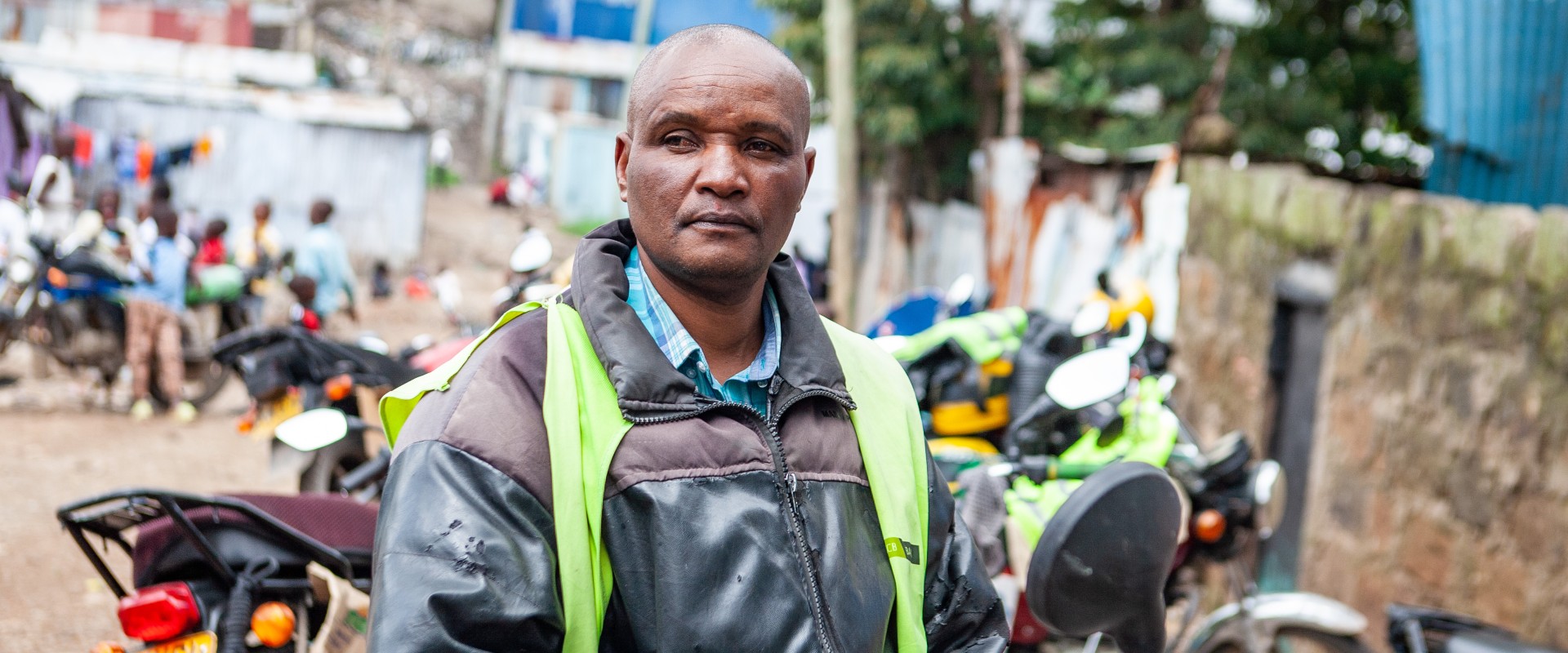 Francis Maina, the chairperson of the Soweto Boda Boda Association in Nairobi, during a training session on online child abuse in Kayole, Nairobi, on April 29, 2024. Photo by Billy Ogada
In 2024, Elly Kegode, a boda boda rider in Nairobi’s Kawangware estate, received a distressing call from a young relative. The 19-year-old girl had been lured to Mombasa by a man she met on Facebook, only to find herself trapped in a nightmare of sexual abuse.
“She told me the man who had invited her to Mombasa was sexually abusing her. Two of the man’s friends who lived with him were also sexually abusing her, in turns,” Kegode recounts.
He guided her to escape, and upon her return to Nairobi, ensured she received medical attention and counseling. The tale is harrowing, but it’s not an isolated incident.
Eliud Wekesa, another boda boda rider from Kibra in Nairobi, shares a similar story about his 16-year-old daughter. After buying her a smartphone for her schoolwork, he was shocked to discover she was communicating with two different men on Facebook and TikTok, planning to meet them in Mombasa.
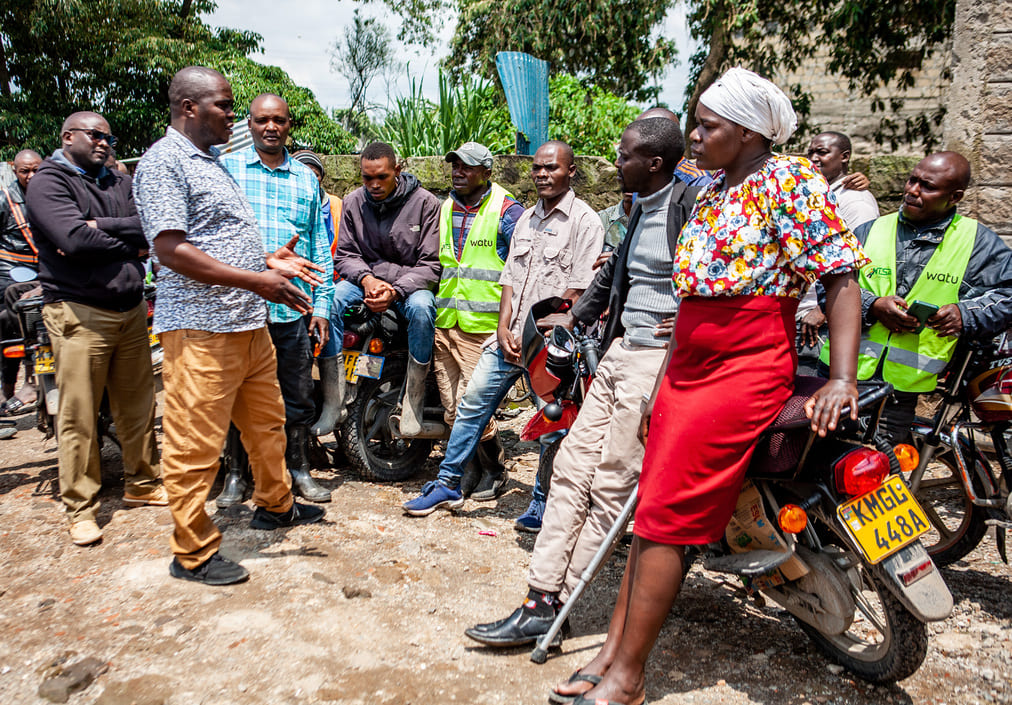 Boda boda operators and parents in Nairobi’s Kayole on during a training session in April 2024.
“When I took her phone, I was very shocked and lost for words when I followed the entire conversations that they were having in the two social media platforms and realized that the men had actually sent her 5,000 Kenyan shillings for her transport to Mombasa,” Wekesa says.
These accounts mirror the experiences of countless unsuspecting girls across Kenya who have fallen victim to perpetrators of online sexual abuse. The internet, while a powerful tool for education and connection, has also provided a sinister avenue for these crimes.
A recent study conducted by UNICEF, End Violence Against Children and Interpol titled “Disrupting Harm in Kenya” sheds light on the alarming prevalence of online abuse. Of the 1,014 internet-using children interviewed, two-thirds admitted to never having been taught about online safety. 14 percent of children aged 12-17 had met someone face-to-face after first encountering them online in the past year, with 6 percent sharing nude images or videos of themselves.
Most disturbingly, nine girls reported being subjected to sexual abuse and exploitation after meeting an offender in person following online contact.
Recognizing the urgency of the situation, ChildFund Kenya has launched multiple initiatives to promote children’s safety online – and boda boda riders, those critical waypoints of human connection, have been at the center of the project.
Implemented in collaboration with Childline Kenya and LifeSkills Promoters, The Safe Community Linkages for Internet Child Safety (Safe CLICS) Project has engaged 1,800 boda boda riders across Nairobi, Kiambu, Kilifi and Mombasa counties.
Disturbed by his relative’s ordeal, Kegode decided to join the campaign that raises awareness against online sexual abuse. He was eager to receive training from ChildFund.
Inside the Safe CLICS Project
The air is thick with anticipation at Bahati Secondary School Hall in Soweto, Nairobi County, the packed room filled with boda boda riders from the area. At the front stands Kegode, his voice carrying authority and concern as he addresses the crowd.
He is leading a crucial education session on online sexual abuse. The riders listen intently as he outlines the various forms this insidious threat can take, from online grooming to sextortion and livestreaming of abuse.
“As boda boda operators, we have a unique responsibility,” Kegode says.
“We must be vigilant protectors of the children we transport daily, especially young girls who are particularly vulnerable to these online predators.”
The session goes beyond mere awareness. Kegode delves into the legal ramifications of online sexual abuse, ensuring the riders understand the severity of these crimes in the eyes of the law.
He also provides valuable information on the remedies and support available to victims, empowering the riders to become not just transporters but potential lifelines for children at risk. The attentiveness of the audience speaks volumes.
Francis Maina, chairperson of the Soweto Boda Boda Association, notes that the initiative’s impact has been significant, as evidenced by the many riders now involved. He explains that beyond targeting riders, they are also educating parents and children about online sexual abuse, its nature, and the dangers it poses.
Beatrice Muema, Safe CLICS project coordinator, explains, “The group is very paramount in taming cases of online sexual abuse. They have in the past been accused to contribute to sexual harassment and abuse, teenage pregnancies and insecurity, but we are now changing the narrative. The operators are now our surveillance team on online sexual exploitation of girls.”
In addition to engaging riders, the project works with 60 schools in Nairobi and Mombasa, training 120 peer educators to spread awareness among their classmates.
ChildFund Kenya Programs and Sponsorship Director Dr. Issa Kipera emphasizes the importance of this multi-stakeholder approach: “We are working with different stakeholders, including government agencies, community organizations, parents and youth groups, to create awareness on this issue. The more awareness we generate, the safer our children will be. We must create a collective responsibility to end online sexual exploitation and abuse.”
The initiative has already shown promising results, with an increase in reported cases of online abuse and coordinated responses in areas where the project operates.
About 300 miles away in Bombolulu, Mombasa County, a similar initiative is unfolding among the boda boda riders.
In spite of the oppressive heat, the riders gathering at the East African Pentecostal Church Hall in Nyali are fully engaged, their attention fixed on Joseph Akoth, a champion of online safety and fellow boda boda rider. Occasional notes are jotted down in notebooks as the riders demonstrate their commitment to learning about this emerging threat to their daughters’ well-being.
Samuel Ogutu, the Mombasa County Boda Boda Operators chairperson, proudly states, “We hold two meetings every month to sensitize our members about online sexual abuse. We also use the various WhatsApp groups and other social media forums to amplify our campaign against this vice.”
The involvement of boda boda riders in this campaign has surprised many, given their previous reputation. However, their unique position in the community has proven invaluable in the fight against online sexual abuse.
John Ngugi, Childline Mombasa County Coordinator, notes, “The riders are involved in transportation of the girls when going to meet the perpetrators. Using them has helped us to nab many of these culprits.”
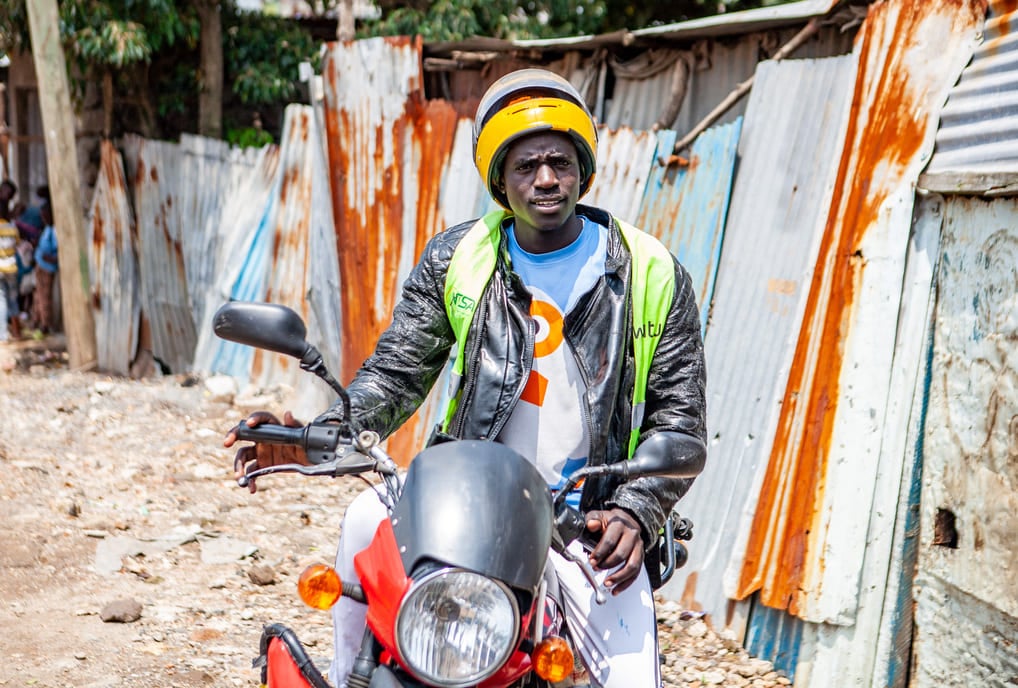 Sigumo Duncan, a boda boda rider attending a training on online child safety in Kayole, Nairobi.
Miriam Kimemia, a child rights activist in Mombasa, echoes this sentiment: “Boda boda operators are doing a commendable job and are our greatest asset as gender and human rights activists. They act as our informers and allies in this work.”
Thanks to the riders’ intervention, numerous arrests have been made, and several cases are currently in court. Miriam says about 20 cases have resulted in convictions, with sentences ranging from 15 years to life imprisonment.
However, challenges remain, Kimemia says. Poor evidence collection often leads to acquittals, and there’s a need for more specialized personnel to handle online sexual abuse cases. The Anti-Human Trafficking and Child Protection Unit (AHTCPU), a specialized police unit, currently has only five officers focused on the issue.
Kenya has also taken steps to address online sexual abuse through national policies, including the National Plan of Action against Sexual Exploitation of Children in Kenya (2018-2022) and the National Information, Communications and Technology Policy (2019). However, these policies have yet to be widely disseminated or fully implemented.
As the digital landscape continues to evolve, so too must the efforts to protect Kenya’s youth from perpetrators of sexual abuse. By working with ChildFund to engage unlikely heroes like boda boda riders and fostering open dialogue about online safety, the country is taking crucial steps to safeguard its children in the digital age.
Loading...
