Humanitarian Response

No matter what the crisis or where it happens, ChildFund delivers lifesaving, multi-sectoral, locally led humanitarian assistance that focuses on protecting and stabilizing the lives of children and youth.
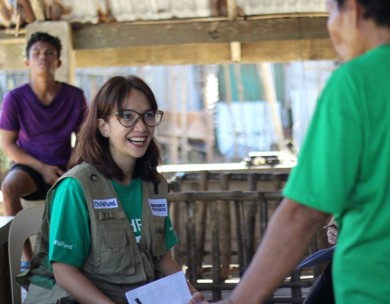
ChildFund aid worker hands out supplies

Sometimes crises strike, sometimes they creep, and sometimes they simmer to a boiling point.

Right now, in addition to increasingly frequent and protracted natural disasters, the world is facing complex crises and conflicts compounded by global terrorism, organized crime and political instability that fuels unprecedented and widespread violence. In this turbulent global landscape, children are always the most vulnerable — and they tend to get lost in the shuffle. But in ChildFund's humanitarian response, children are our first priority.

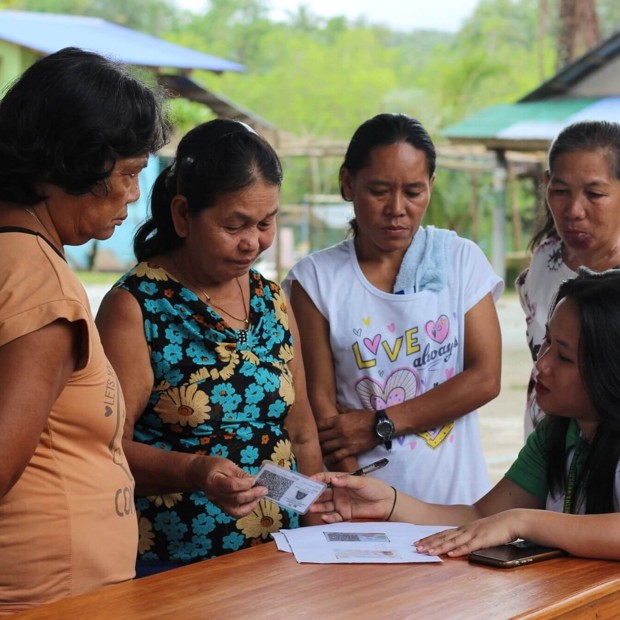
Community members in the Philippines participate in storm recovery initiatives after Typhoon Fung-Wong.

This is for us. For the children. We need to stand back up. Now that some help has arrived, I can slowly start buying the things I need.

— Editha (left), who lost her home when Typhoon Fung-Wong devastated the Philippines in November 2025. As she and her neighbors cleared roads and repaired the local school, ChildFund, our local partner organization and the town government supported them with cash for work as part of a humanitarian response that addressed health, protection and recovery needs.

Approach: Protection for the Most Vulnerable

ChildFund’s holistic approach in crisis prioritizes children’s protection and inclusion in any situation. As we respond in crises, we also collaborate with governments, communities and civil society to facilitate stability and protection for children, ensuring sustainable impact.

ChildFund’s humanitarian response is sharply child focused, with a strong emphasis on children's and youth’s unique protection needs that arise in crisis. In addition to non-food items and other resources, safe and accessible water and sanitation facilities, and educational and recreational support, we also provide Child-Friendly and Safe Spaces, mental health support, rapid protection and risk assessments, emergency case management and referrals, and information to aid basic protection awareness.

Crises like conflict and natural disaster cause and worsen risks to children's health, education and safety — and ultimately threaten their lives. Humanitarian response often does not adequately prioritize and respond to the unique needs of children. ChildFund supports communities, civil society partners and governments to lead child-focused humanitarian preparedness and response activities, because we know local leadership is the best strategy for adaptation and the strongest path to durable results for children.

ChildFund partners with local and national groups to strengthen their humanitarian preparedness activities and ensure that they can act quickly to protect children during crises. This includes training and continuing support for emergency preparedness planning and community-based child protection, as well as pre-positioning non-food items for rapid distribution in an emergency. ChildFund seeks to strengthen connections between local and national systems to lead child-focused humanitarian responses to emergencies, and to ensure that all children can grow up healthy, educated, skilled and safe, even in crises.

When crisis leads to significant displacement or long-term challenges that require a more comprehensive and sustained approach, our program gradually transitions to interventions that ensure focused and equitable protection for the most vulnerable and socially disadvantaged populations experiencing displacement. Our programs establish safe spaces as a first-line response in settlements for displaced populations, including safe spaces for young people where they can access lifesaving services including protection, health care and specialized mental health and psychosocial support.

For children and families ready to reintegrate after arriving in a new community or returning home, our support in two countries — Ecuador and Uganda — focuses on economic recovery, integration into educational systems and protection. In Ecuador, now home to a displaced population of about 871,000, we work with people who have arrived from Colombia or Venezuela; in Uganda, we work in the Palorinya Refugee Settlement to support Sudanese and Congolese people who have fled conflict in their home countries. Local conditions play an important part in defining the design of both countries’ programs.

Through robust collaboration and advocacy, we bridge humanitarian response and sustainable development. Leveraging ChildFund's extensive experience and partnerships, we influence local and national policies to prioritize the needs of the most vulnerable. Our approach ensures that the rights and well-being of displaced children and families are central to both immediate response and long-term recovery efforts. 

Across all our programs addressing children in crisis, a critical shared element is their unique localization strategy, implemented effectively in highly complex humanitarian contexts. This approach involves working closely with relevant authorities and stakeholders from the community level to the national and international levels. The programs facilitate communication and cooperation among local partners and key actors, building relationships that extend beyond the programs' duration. All initiatives embody a holistic view, focused not only on the young people — the core population of interest — but also on their families, their teachers, their communities and other stakeholders who can help build supportive structures and promote access to education and livelihoods. 

Throughout all our efforts, ChildFund commits to:

Tending vulnerable communities  
In Mexico between 2021 and 2023, ChildFund supported 2,118 people from vulnerable communities and people living with disabilities.

Supporting marginalized groups
In Ecuador, we work to improve access to and quality of education for internally displaced people, especially girls.

Localization in protection
In Uganda, one of our aims is to facilitate sustainable local child protection. ChildFund and other partners supported local organizations to build this within their communities.

Sustainable livelihoods
A pilot program in Ethiopia has developed sustainable technology for agriculture and livestock production, strengthening the livelihoods of 1,600 households in its first year. 

Community-led child protection
In Guatemala, local partners facilitate a community-led, power-sharing child protection process, amid and despite prolonged crisis.

Holistic child protection in emergencies
Our response to internal displacement caused by the conflict in northern Ethiopia included child protection, nutrition support, education and creation of safe spaces for children, supporting nearly 13,000 people between 2021 and 2024.

Protection, health and education
Our holistic program for displaced families in Honduras offers education and safe play spaces for children in shelters, community-based mental health support, support for frontline workers at the southeastern border, maternal and child health services, and prevention of and response to violence.

Experiences and Challenges in Human Mobility

In Ecuador, ChildFund and our partners are working to support children and families living as refugees to help provide access to decent livelihood opportunities, quality education and safe and protective communities.
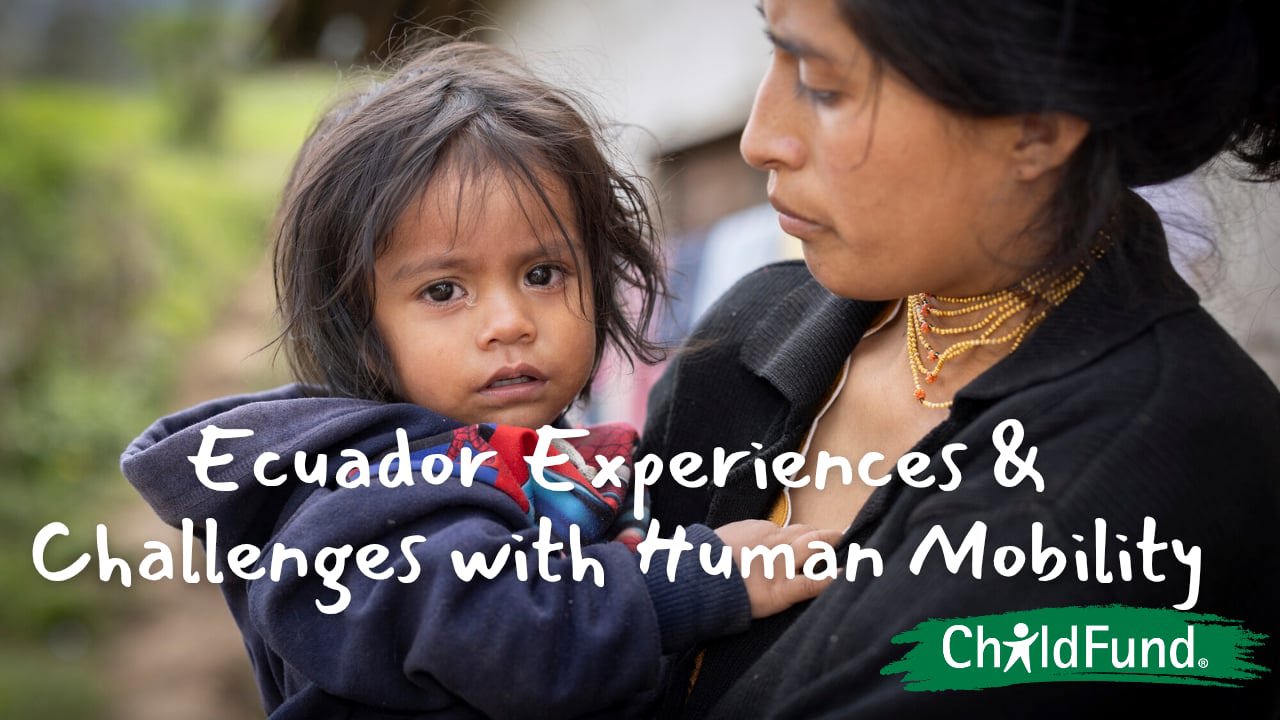
Mother holds child

Contact

Radwa el Manssy
Director of Protecting Children in Crisis
RManssy@ChildFund.org | LinkedIn