Pairing Safe Classrooms with Foundational Learning
Posted On 10/07/2026 | 5 minutes
By Kevin Nascimento, Senior Education Advisor
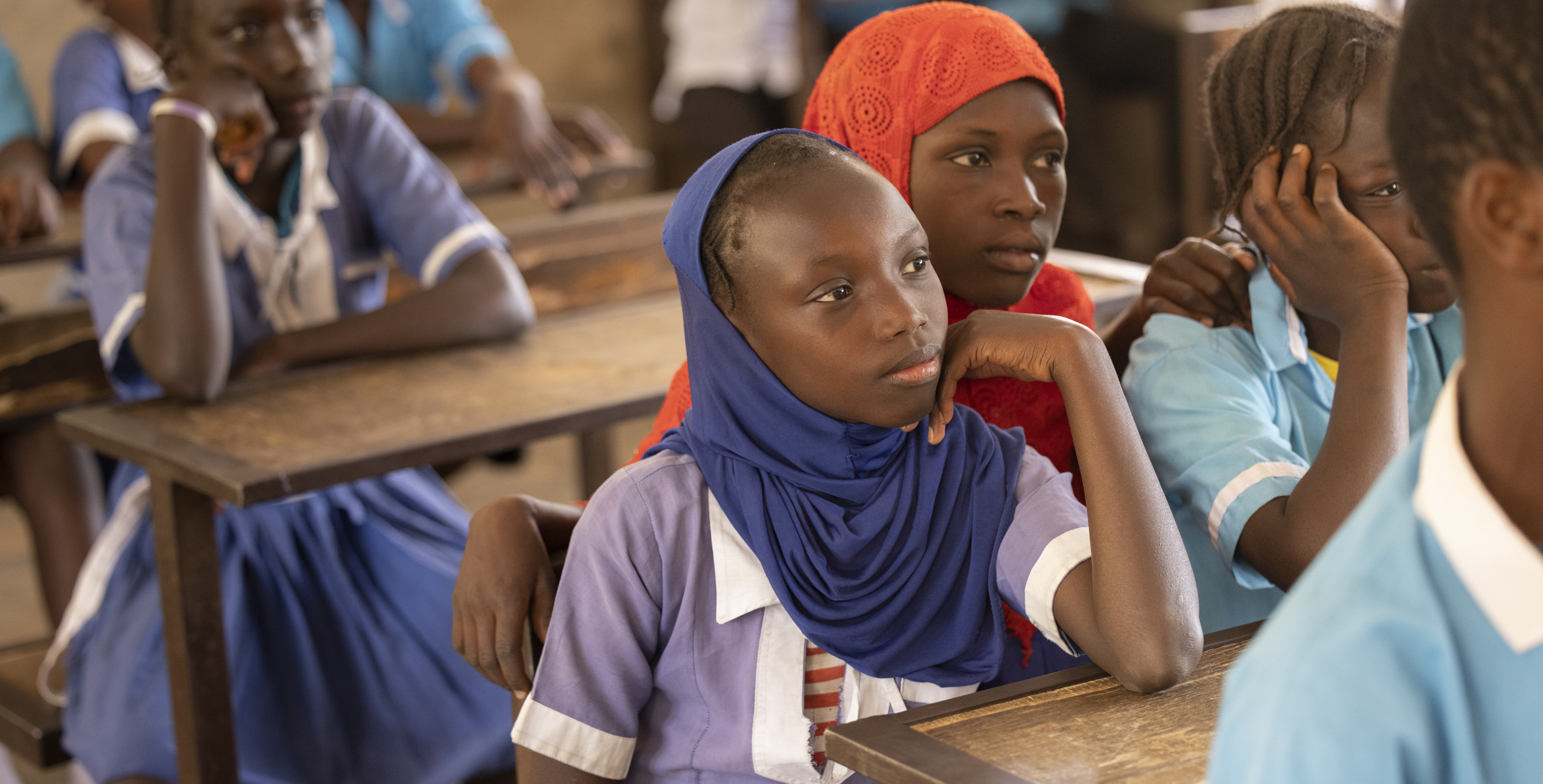
For much of its history, ChildFund’s education programming has centered on the conditions that make learning possible, meaning safe classrooms, engaged families and schools where children feel they belong. Those conditions remain essential, and we are now pairing them with a direct commitment to foundational literacy and numeracy, measuring what happens around a child along with what a child actually learns.
A Different Kind of Question
The Education and Protection for Wellbeing (EPW) program was adapted from a school-based violence prevention program model first implemented in Honduras and co-designed over several years with ChildFund staff and ministries of education across 15 countries in Africa, Asia and the Americas. Its design works on the environment around a child, supporting teachers on classroom management, caregivers on parenting and schools on climate and protection. Earlier phases delivered real gains on that environment, with conflict resolution skills improving by 35.8% and self-concept by 26.8% across the countries where the model has run. But none of those phases was positioned to show whether children were learning to read, because literacy instruction was not part of the design.
What changed in The Gambia is that the most recent iteration of the model added a literacy component alongside the environment-focused work, giving the program something to measure that earlier phases never generated and creating the first real opportunity to see whether the two move together.
Why Foundational Skills, Why Now
The case for pairing the enabling environment with foundational learning reaches well beyond any single program. When the OECD released PISA 2025, it recorded the lowest average performance across participating education systems since the assessment began, spanning science, reading and mathematics. Reading has been declining since it peaked around 2012, and mathematics fell especially sharply after 2018. This trend line predates any single crisis and points instead to something more structural in how foundational skills are being built and sustained, which is precisely the ground the work in The Gambia was designed to address.
The same pattern appears far earlier in a child’s education than PISA is able to capture, since UNESCO’s 2026 Global Education Monitoring Report finds that only 58% of children worldwide reach minimum reading proficiency by the end of primary school, and a child who cannot read by the early grades rarely recovers, because every subject that follows is taught through reading. Read together, the two describe the same problem at different points in a child’s education, which is why foundational literacy and numeracy, rather than school climate or enrollment alone, are where ChildFund is now focusing its programming.
What The Gambia Showed
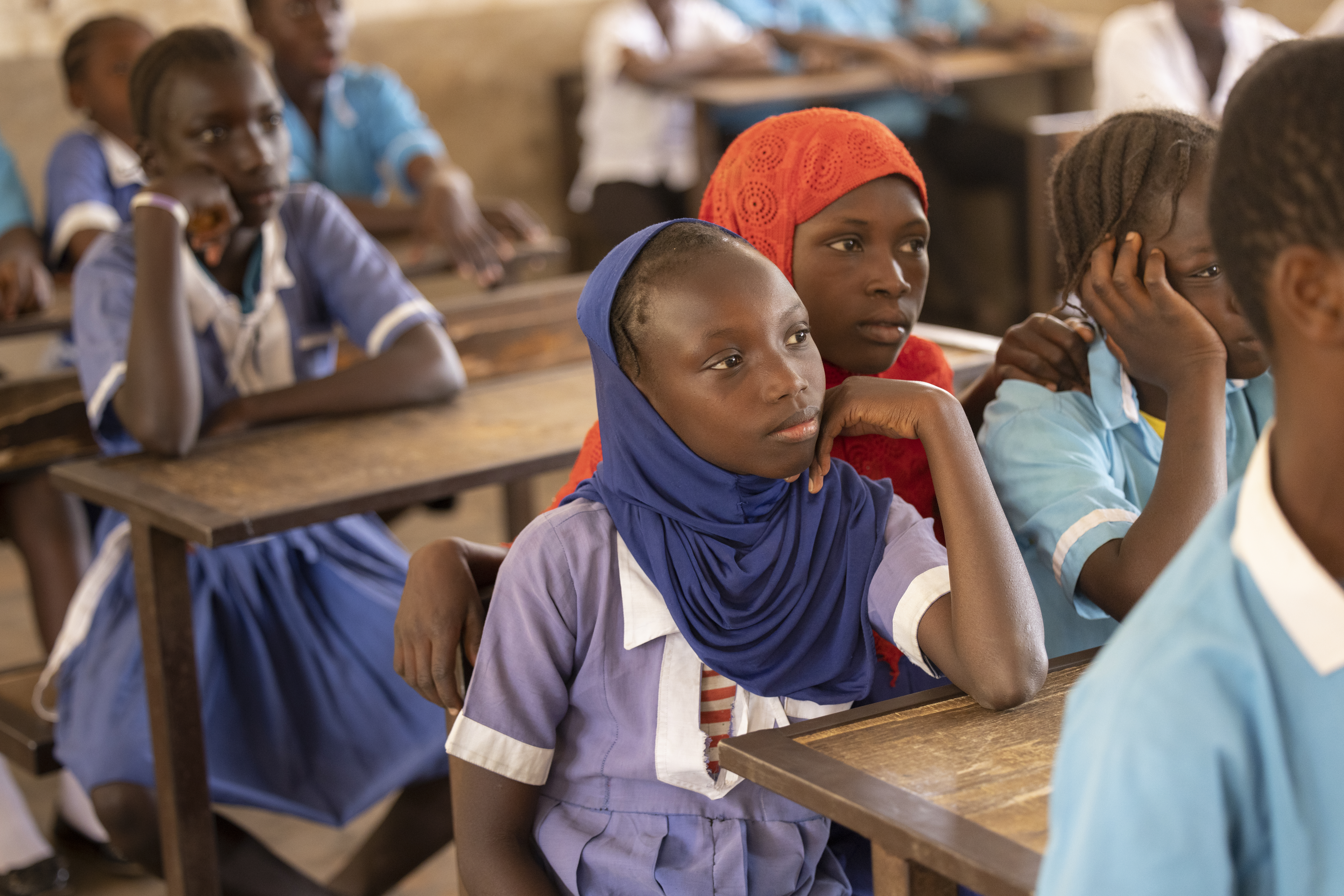
Funded by Germany’s BMZ and delivered with ChildFund Deutschland alongside Gambian partners Saama Kairo Federation and Foni Ding Ding Federation, the program was evaluated using a quasi-experimental waitlist design, where one group of public schools began the work while another started later. Comparing how each set of schools changed over the same period allowed researchers to attribute the differences to the program itself rather than to other factors affecting schools more broadly, and the evaluation drew on data gathered from 879 students, 848 caregivers and 189 educators.
The environment results came back much as earlier phases would have predicted, with students describing stronger relationships with their teachers and a better school climate, and reporting less corporal punishment, which teachers independently confirmed. Fifteen caregiver outcomes improved significantly, including more positive parenting, less coercive discipline and more involvement in schoolwork at home. The clearest signal, however, appeared in reading, where 30% of students in the program schools were reading at paragraph or story level compared with 14% in the comparison group, while 21% remained at beginner level against 38% in control schools.
Building the Evidence Forward
This work sits inside ChildFund’s goal to bring lasting impact for 100 million children and their families annually and names Learning & Education in a Digital Age among its four enduring commitments to children. Generating stronger evidence of impact is central to how ChildFund intends to deliver, ensuring programs demonstrate measurable results and support continuous learning and accountability.
In The Gambia, the comparison schools are now receiving the program themselves, with a third round of data collection planned for 2027. The commitment is to keep measuring the learning, report it honestly, and let the evidence shape what comes next.
This article originally appeared in Global Campaign for Education’s blog in September, 2026.