The Multiplier Effect of Land Restoration: Greener Spaces, Stronger Livelihoods and Healthier Children
Across Ethiopia and Kenya, community-led restoration is helping families adapt to a hotter, drier future.
Posted On 09/14/2026 | 2 minutes
Across parts of East Africa, land degradation, drought and rising temperatures are putting pressure on families who depend on the land for food, income and stability. For children, these stressors can mean hotter classrooms, reduced food security and fewer opportunities to learn, play and thrive.
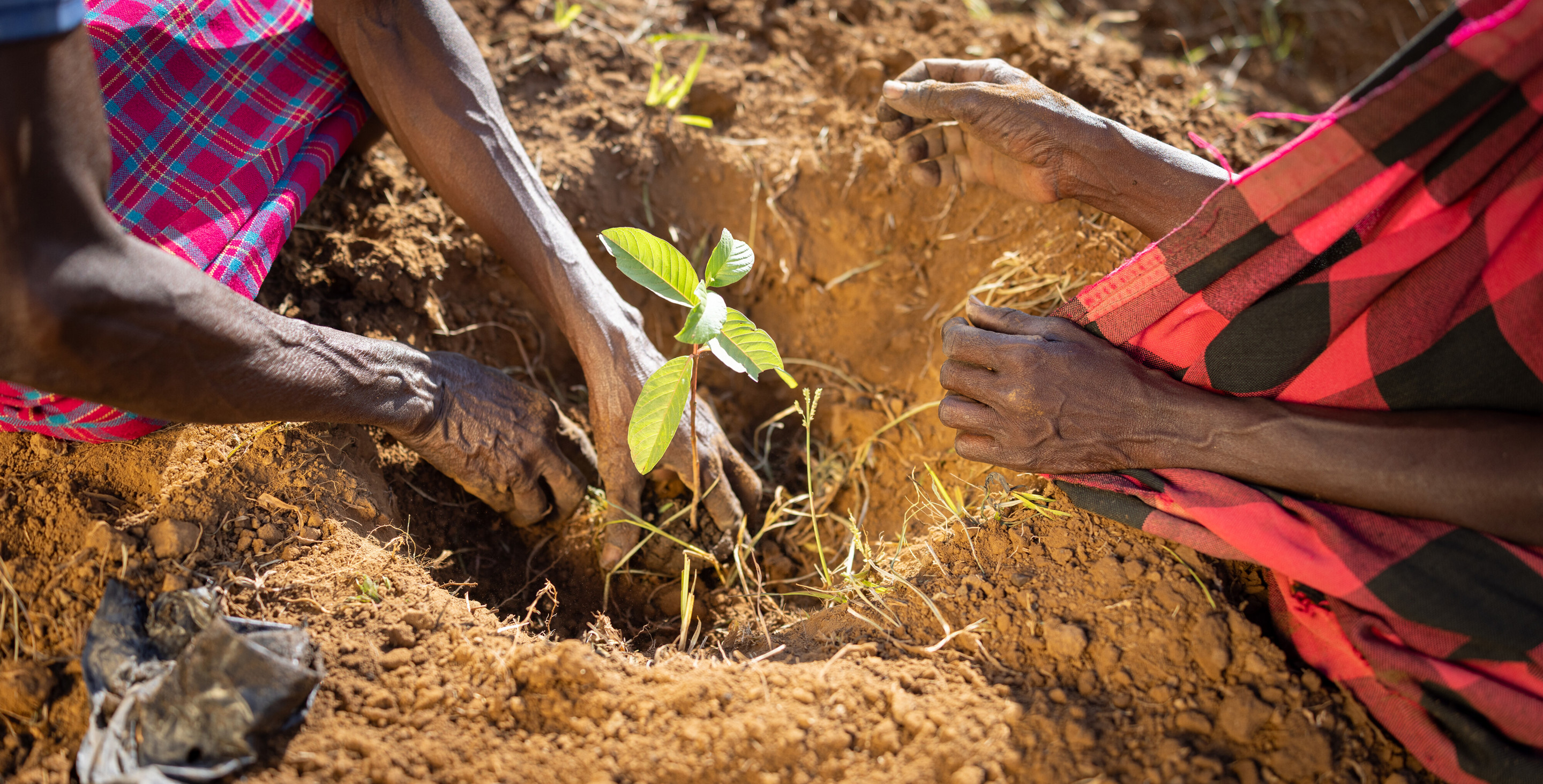
ChildFund is working with local partners and communities to show how restoring land can create benefits that multiply across households, schools and local economies. In Ethiopia’s Oromia Region, ChildFund Ethiopia and Future Generation Organization are helping communities restore degraded drylands, farmland and school grounds through afforestation, soil rehabilitation, erosion control and community-managed nurseries. Native and climate-appropriate species are turning once-barren spaces into productive green areas that support biodiversity, livelihoods and resilience.
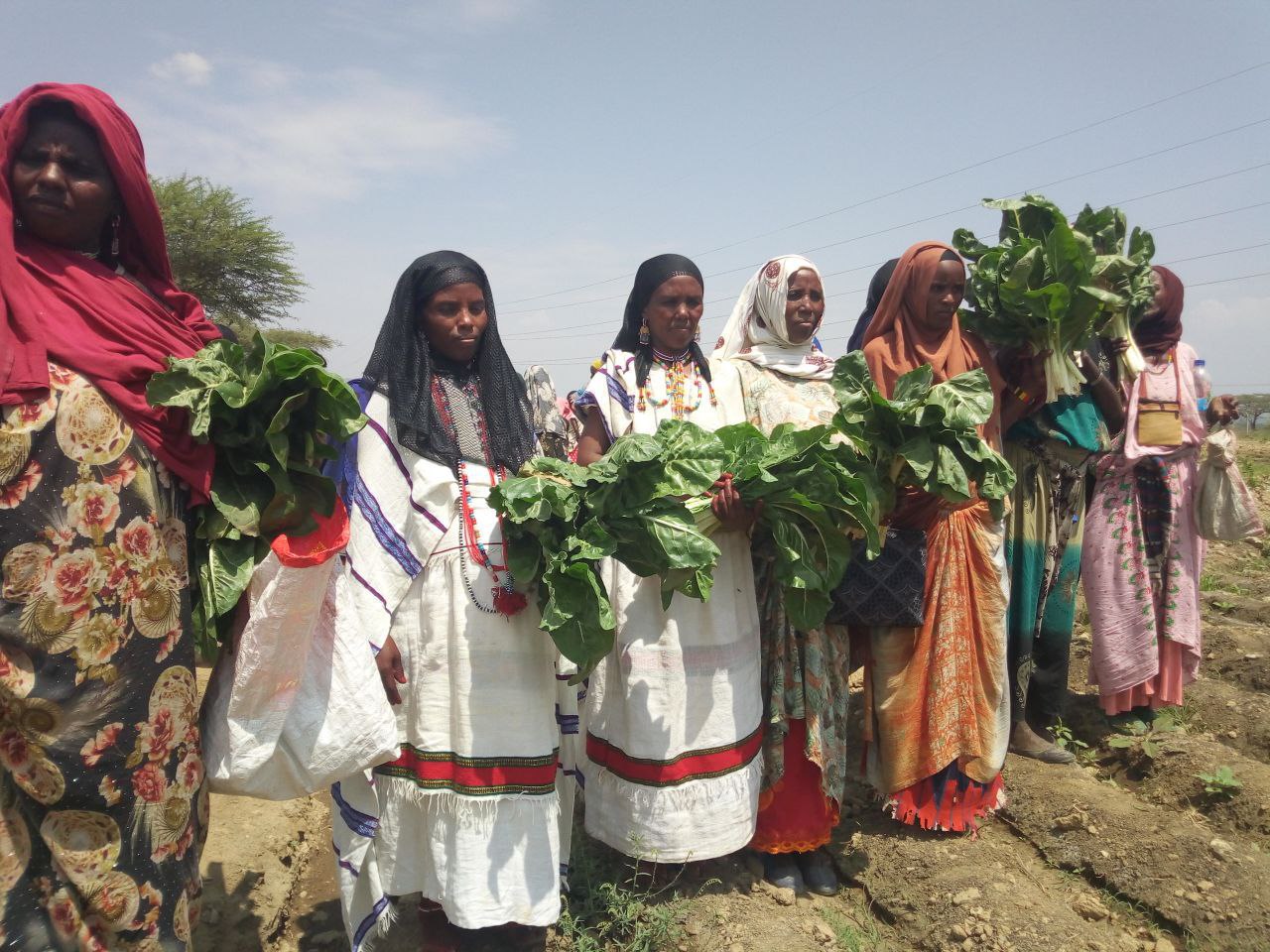
Members of the Fentale District Women's VSLA displays their recent harvest.
Women are central to this transformation. More than 60 women’s Village Savings and Loan Associations, representing over 1,200 women, have established 15 community-run nurseries and produced more than 321,000 seedlings, including shade, fruit and medicinal trees. Their efforts have contributed to an 80% increase in tree cover in designated planting areas, while reducing erosion and flooding and generating income through seedling sales.
The benefits extend beyond income. Women’s groups are strengthening local governance by managing nurseries, coordinating planting and working with local authorities. Schools, too, are becoming greener and cooler. Trees planted in school compounds provide shade and fruit, while children in environmental clubs help plant and care for seedlings, building practical skills and a stronger sense of stewardship.
In Kenya, farmer-led agroforestry shows similar promise.
In semi-arid Makueni County, ChildFund Kenya and local partner Emali Dedicated Children’s Agency implemented the Upscaling Tree Farming through Tree Farming Management Information System project with support from Barnfonden. Farmers integrated trees into existing farms without displacing crops or livestock, planting 10,000 new seedlings and prioritizing drought-tolerant, high-value species such as moringa, mango, avocado, neem and grevillea.
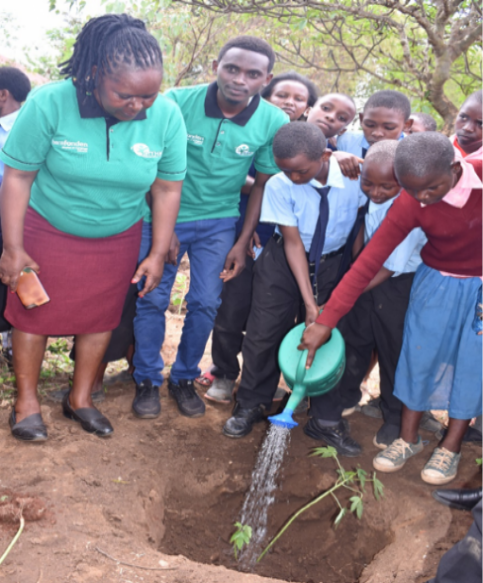
Primary school children water a seedling during a tree-planting session in Makueni County.
Using the Tree Farming Management Information System, 626 farmers registered and monitored more than 33,700 trees across Emali and Mulala wards, contributing to the restoration of about 32 hectares of degraded farmland. Youth supported data collection and monitoring, while solar-powered water pumps helped farmers care for seedlings. Average seedling survival reached about 80%, and an estimated 3,500 children benefited through improved household stability, nutrition and school-based environmental activities.
Together, these efforts show that land restoration is not only an environmental intervention. When led by women, youth and local communities, it can strengthen livelihoods, improve learning environments and help children grow up in healthier, more resilient places.
Through our sustainability programs, ChildFund is contributing to the global momentum of the UN Decade on Ecosystem Restoration—a worldwide effort to prevent, halt and reverse the degradation of ecosystems.