The power of collective impact (and orange-fleshed sweet potatoes)
Posted On 06/29/2026 | 3 mins
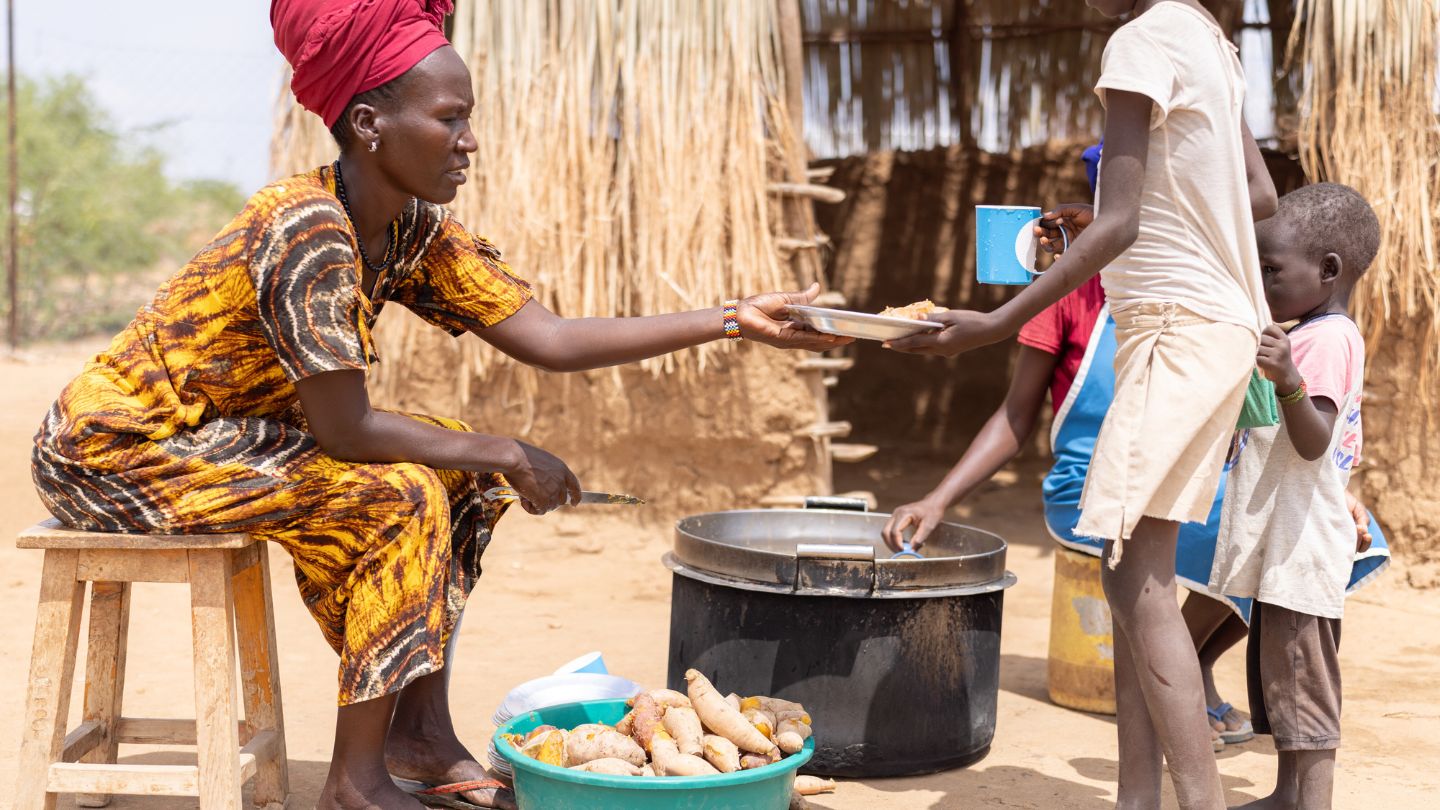
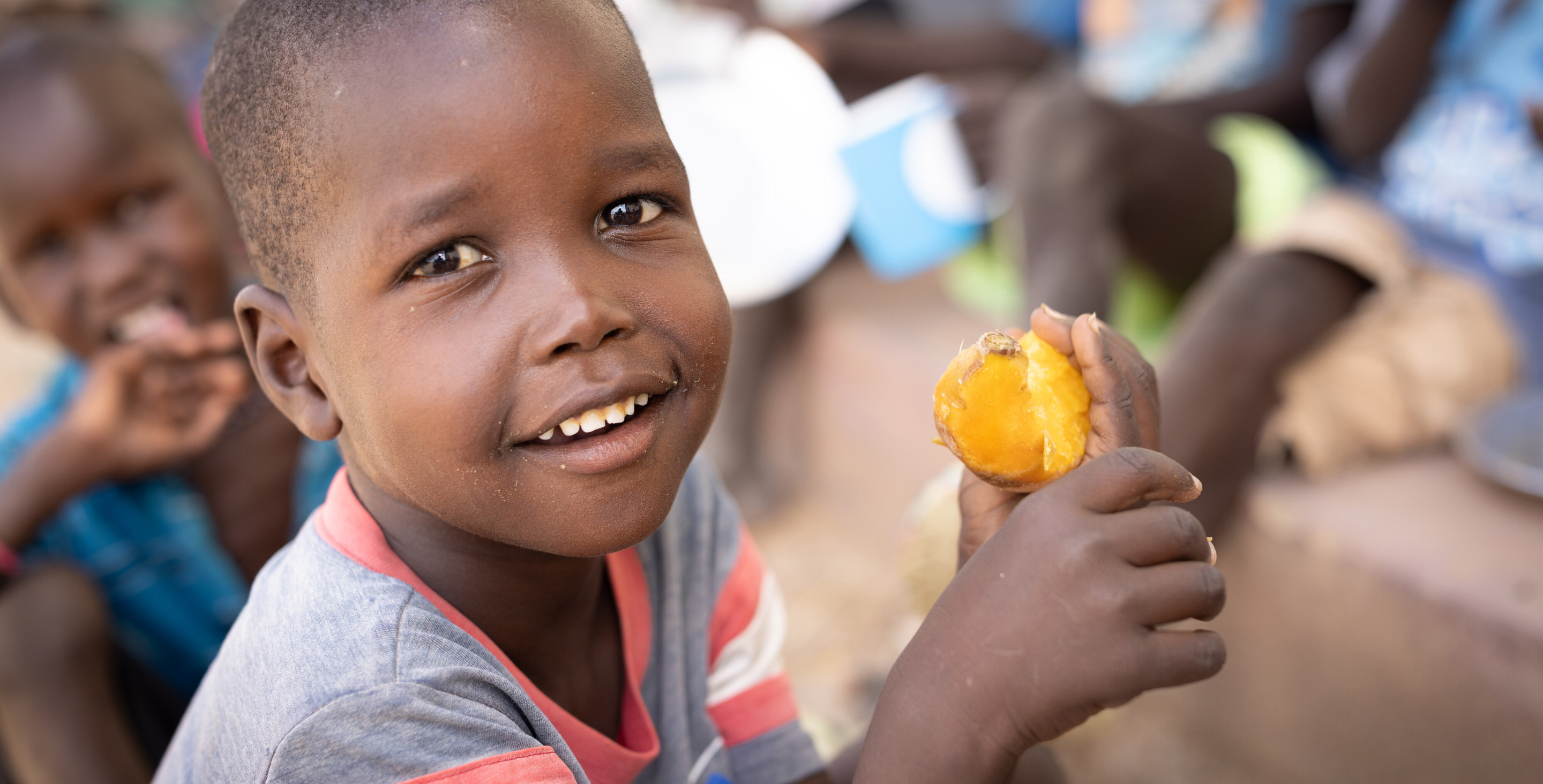
In northern Kenya, the high temperatures and perennial drought that grip Turkana and Samburu counties have long posed a challenge to food security and nutrition, especially for children under 5 and pregnant or lactating mothers. Enter the orange-fleshed sweet potato, a drought-tolerant, vitamin A-rich nutritional powerhouse that grows quickly. Tasty, too.
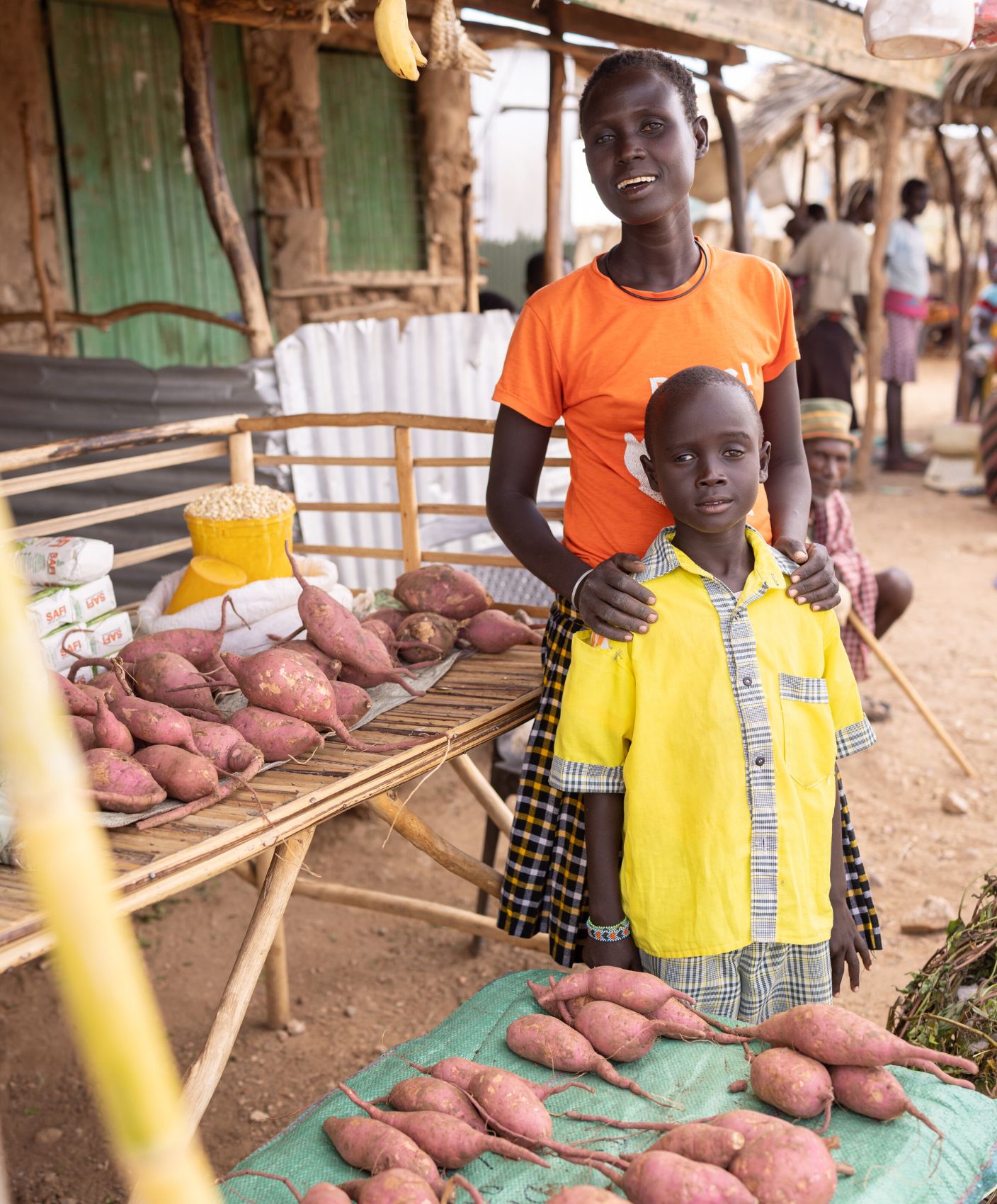 Akai sells orange-fleshed sweet potatoes in the town market with her son, Gregory (5).
The Sustainable Production and Consumption of Orange-Fleshed Sweet Potatoes (OFSP) project enhances the resilience and livelihoods of women and children from vulnerable farming communities. The project established producer groups and community seed systems, promoted value addition and developed modern agricultural infrastructure, including boreholes, irrigation systems and eco-sheds.
The impact? County-level data show malnutrition rates declining from over 30% to about 20%, with vitamin A deficiency significantly reduced, while 86% of households report a 50% or greater increase in monthly income.
It’s been a strong, multi-year collaboration across donors, government and humanitarian partners:
- Germany’s Federal Ministry for Economic Cooperation and Development (BMZ) funded the project via ChildFund Deutschland from its launch in September 2020 through April 2024, with ChildFund International sustaining it and investing in infrastructure since then.
- ChildFund’s local partners Frontiers Children Development Organization in Turkana and the Samburu Children’s Program implemented the project.
- Community members rehabilitated irrigation canals through food-for-work and cash-for-work agreements.
- The Etic women’s group, established by ChildFund under an earlier Food for Assets project, is an integral link in the OFSP value chain, transforming farmers’ harvests into flour, porridge and crisps. The flour has been certified by the Kenya Bureau of Standards and can be sold throughout Kenya.
- Kenya’s Ministry of Agriculture (specifically the Kenya Agricultural and Livestock Research Organization) provided training and ongoing technical support for farmers on production of quality seeds and vines.
- The World Food Program supported the project in Turkana by fencing in an irrigation scheme and in Samburu by financing the production of quality, certified vines for distribution to farmers.
- The International Labor Organization provided a grant to facilitate market linkages via a mobile phone application for buying and selling among farmers, traders and buyers.
- Officials from Kenya’s Ministry of Health were also trained on the health benefits of OFSP to promote the crop among mothers to combat malnutrition in communities, which they continue to do. The ministry also has been involved throughout the project to monitor how the addition of OFSP to children’s diet has moved the needle on malnutrition. It has, so much so that vitamin A is no longer distributed at MOH growth monitoring and health outreach sessions in the three areas of Turkana where the project is implemented.
- World Relief, the World Food Program and a U.S. government-supported nutrition initiative all saw the success of the production and consumption of OFSP and have used it in their own programming.