When girls have choices: From local action to regional change
Posted On 10/11/2026 | 5 mins
By Susmita Choudhury, Sr. Advocacy Advisor, ChildFund
Most teen girls have things they worry about from time to time. It’s a normal part of adolescence. Getting good grades on exams, navigating social pressures, friendships or dating. But for most girls, they don’t have to worry about getting married.
Across South Asia, however, too many girls are facing this reality. According to UNICEF, around 1 in 4 young women were first married before their 18th birthday. The region is home to around 290 million child brides, accounting for 45% of the global total. Child marriage is devastating for a young woman. It means leaving school, losing opportunities, becoming economically dependent, and facing greater risks of violence and early pregnancy. It means losing the ability to make decisions about her own life.
There has been significant progress in reducing child marriage, thanks to increased campaigns and awareness raising. But the practice continues, particularly where poverty, gender inequality, social expectations and limited opportunities come together. In India, the National Family Health Survey (2019-21), reported that 25.4% of women aged 20–24 in Rajasthan are married before the age of 18. This is a significant decline from 35.4% recorded in the previous report (NFHS-4), but it shows that progress alone is not enough.
Preventing child marriage requires efforts beyond awareness campaigns. Prevention needs to include providing girls the opportunity to develop skills, the ability to make decisions and to see pathways beyond marriage. Ending child marriage means making sure that girls have something compelling to say yes to: like staying in school and accessing higher education, learning new skills, playing sports, developing a career aspiration and making decisions about their own future.
Working with adolescent girls across Udaipur district including Gogunda, Jhadol and Kotra, ChildFund India’s Swabhiman program works to reduce girls’ vulnerability to child marriage by strengthening education, life skills, digital skills and pathways to higher education and livelihoods. The program has reached more than 2000 girls, supporting them through scholarships, technical support, social-emotional learning and future-proof skills. Through youth groups, peer education, life skills sessions and leadership opportunities, the girls who participate learn about child rights, the Prohibition of Child Marriage Act, available support systems and ways to identify and respond to early marriage risks. Many girls become peer leaders, initiating conversations with other young people, engaging with local government officials in their community, and participating in campaigns and awareness-building activities.
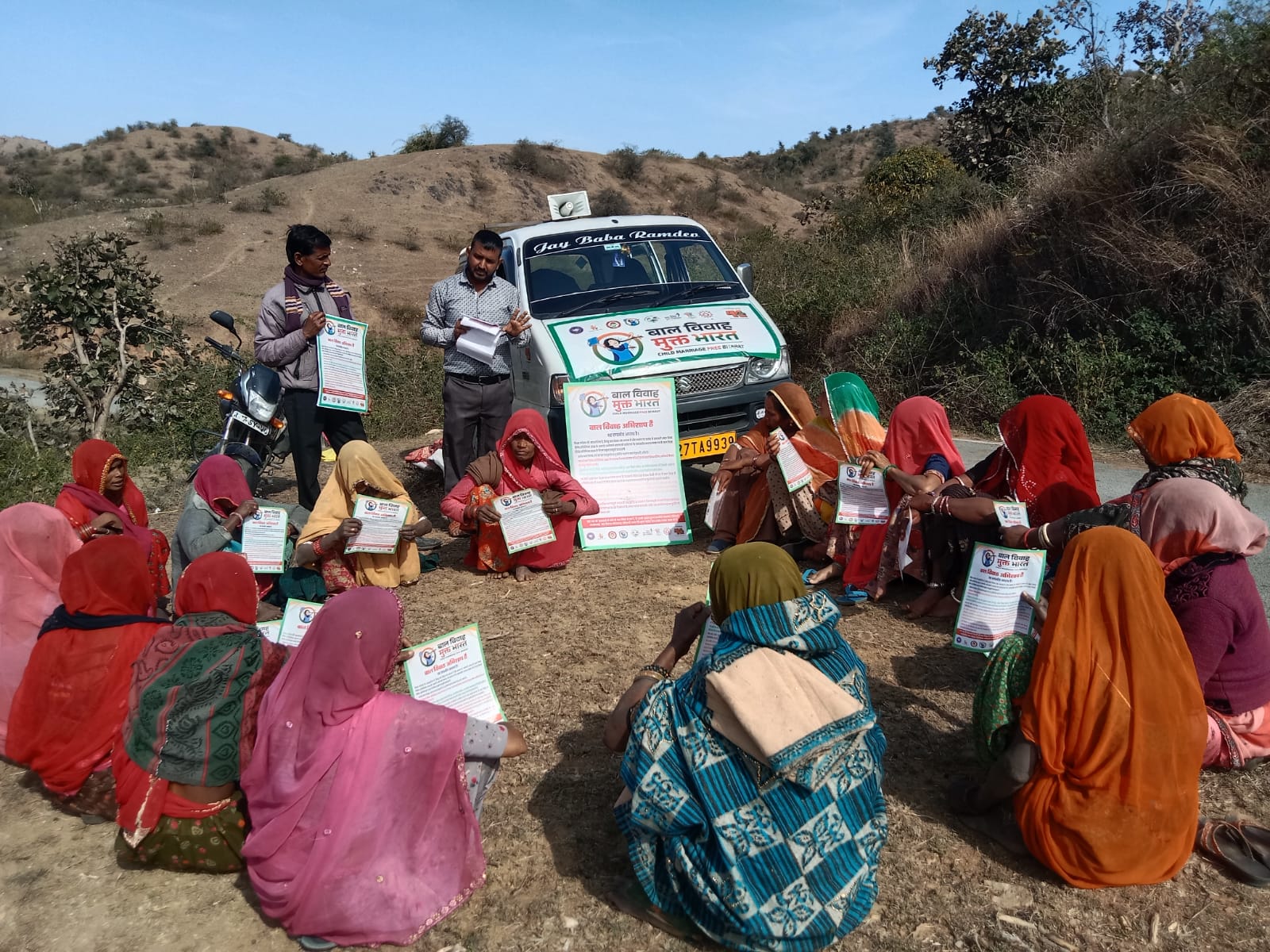 A scene from one child marriage awareness campaign conducted by ChildFund in Rajasthan.
The program also supported girls in sports by providing cricket equipment and basic training, and in 2023 the girls’ team participated in the Rajasthan Gramin Olympic Khel going on to win second place in their district level.
Beyond individual programming, ChildFund India also participates in the South Asia Regional Forum on Ending Child Marriage, which brings together governments, civil society, regional institutions, development partners and young people to reflect on progress and challenges and to strengthen commitment and agree on collective action on eliminating child, early, and forced marriage (CEFM) across South Asia.
Instead of worrying about marriage, through these interventions and collective action on national and regional level, girls are gaining confidence, using their voices and supporting each other to shape their futures on their own terms.