Education
ChildFund’s education programs take a holistic approach to supporting children’s academic and social-emotional development and their physical and emotional safety.
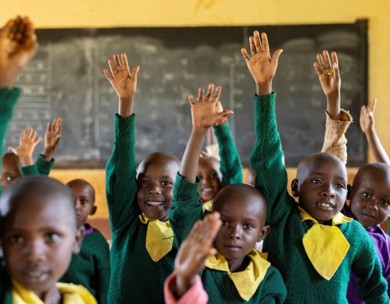
Every child needs a quality education to thrive.
Given the right conditions, children have bottomless capacity to learn and to shape their own futures. ChildFund works to create those conditions.
Children who do not acquire literacy and numeracy by age 10 rarely catch up, and the consequences reach far beyond the classroom: higher dropout rates, reduced lifetime earnings and poverty that persists from one generation to the next. And this isn’t about just reading and math literacy. When children and teachers lack the social and emotional skills that make learning possible, even strong curricula fall short.
ChildFund's education programs take a whole-child approach, recognizing that real improvement depends on three things working together: what children learn, how they are taught, and the support they receive in and beyond the classroom. Working through local partner organizations and government systems, we bring foundational skills, teaching quality and community engagement into alignment around one shared goal: that every child learns, progresses and stays in school.
- We help children build the foundational literacy, numeracy and social-emotional skills they need and ensure that they can catch up and move forward.
- We support schools and school systems to not only deliver quality instruction that truly reaches children, but also create the conditions to sustain it.
We engage caregivers and communities as active partners in children’s education, powering learning beyond the classroom and keeping children in school.
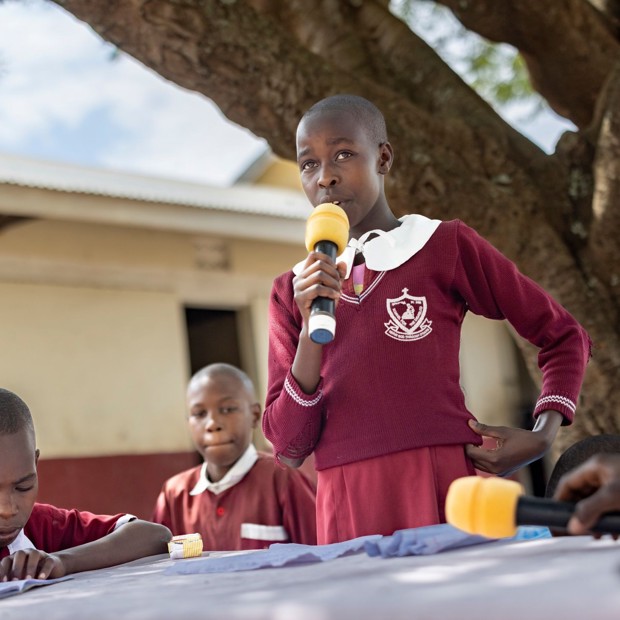
I have a right to education, a right to shelter ... a right to food, a right to medical care. At the Child Rights Club, we discuss violations of children’s rights and the solutions to them.