Strengthening a future-proof workforce
Posted On 09/17/2026 | 5 mins
ChildFund is building access, equity and literacy so young people can open their own doors. As young people come of age in today’s changing markets, they face enormous challenges around employability and employment. Most of these youth are in Africa and Asia.
ChildFund’s programs help young people build the skills they need for today’s rapidly changing global job market, including demand-driven training on technical, vocational and life skills, digital and financial literacy, and entrepreneurship. Through our partnerships at the local, national and international levels, we are building digital access, literacy and safety to ensure that youth are not only prepared to work but also ready to adapt as hiring practices and market needs change.
Kenya: Janet gets to work.
Reporting by Ongidi Kevin Otieno
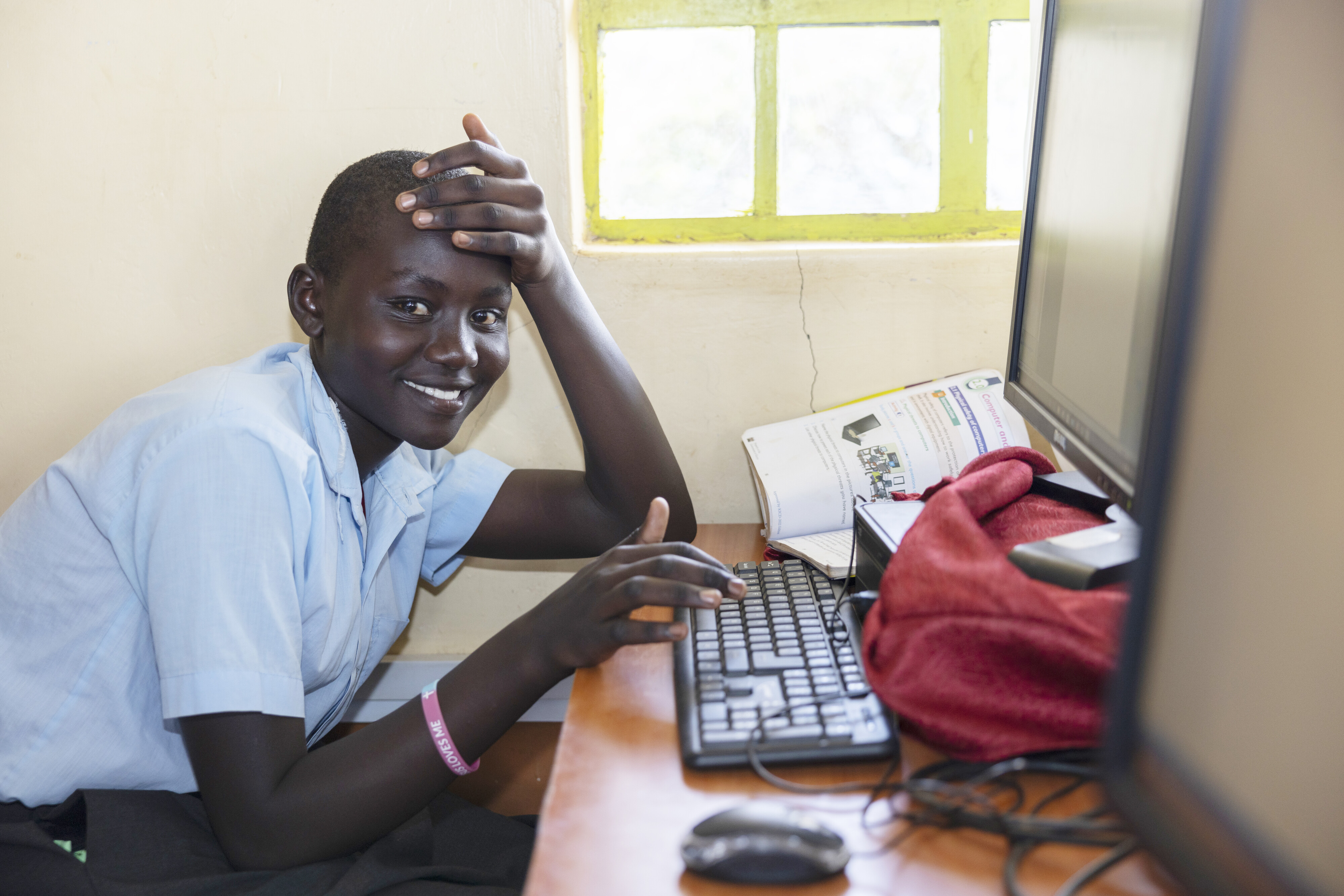
Janet, a 23-year-old from Kenya, knows all too well how it feels to be unemployed and uncertain about her future.
“I spent two years jobless,” she says. “Now, I’m offering social media services to local businesses.”
What changed? Janet enrolled in the Ajira Digital Skills Training Program, spearheaded by Kenya’s Ministry of Information, Communication and Digital Economy and supported by ChildFund. This hybrid program, combining technical training, practical skill development, and in-person and online mentorship, seeks to equip youth with practical skills for online work and digital entrepreneurship.
“This training didn’t just give me skills — it gave me confidence and income.”
— Janet, a participant in Kenya’s Ajira Digital Skills Training Program
For youth, the training has opened doors to remote work opportunities, digital freelancing and, most importantly, a sense of purpose and agency.
Sri Lanka: Imashi and Waruni close the gap.
In 2021, a nationwide survey in Sri Lanka found that only one in five households owned a computer, less than half of the population used the internet, and email users were even fewer. Digital literacy was low, especially among women and girls. In English literacy, rural children, especially girls, tested behind urban children due to a lack of educational access and resources.
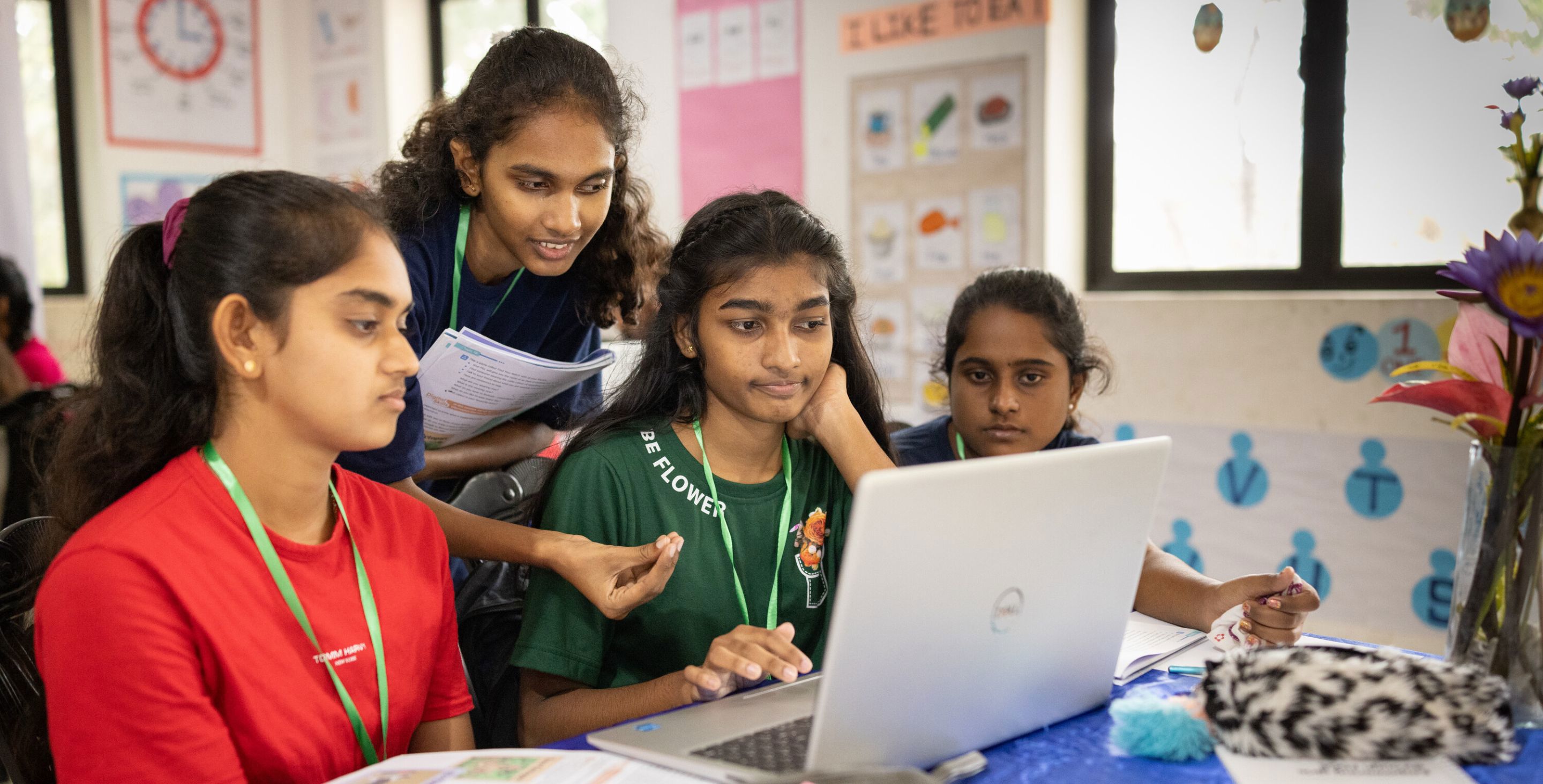
ChildFund’s English and Digital for Girls’ Education (EDGE) project, funded by the British Council, seeks to bridge the English and digital literacy gap for girls in some of Sri Lanka’s most isolated communities, helping them build the hard and soft skills they’ll need to succeed in education and, later, employment.
At weekly after-school clubs, adolescent girls aged 13 to 19 gather to learn English, information communication technology and life skills. Peer group leaders from their community facilitate their discussions, along with a coordinator from the British Council.
“We need to learn English considering today’s technical advancement,” says Imashi (15), a participant. “Most IT things are in English. And if we’re applying for a job, they check our English skills first. So, we need English.”
Peer group leader Waruni, 16, helps girls learn to navigate technology and do it safely. “We need digital skills to prepare documents, send emails, or to open a Gmail account,” she says. “We use phones and laptops in our daily lives, but we must learn to use them properly and responsibly. There are weird people out there.”
 Peer group leader Waruni (16) helps guide a digital literacy lesson for club participants (left to right) Tharushi (15), Dasuni (15) and Imashi (15).
EDGE now offers two courses: a next-level curriculum for past participants and the foundational one for new girls, reaching 1,200 girls across 38 locations, with over 100 leaders trained.
Brazil: Érica dives into science.
In 2023, Érica, a child in our programs in rural southeastern Brazil, wrote to her sponsor explaining that while she wanted to pursue a career in veterinary science, there were no advanced science classes available at her school.
Her sponsor happened to have a connection at the Elfenworks Foundation, a California-based foundation whose work centers on fueling hope through education and innovation.
The foundation worked with ChildFund Brazil to determine how they could best support students at Érica’s school with improved STEM education. When ChildFund and Elfenworks decided to move forward with a robotics course, Érica was thrilled — and hopeful for the future, indeed.
That first project equipped the science classrooms at her school with everything from microscopes to laptops to small robots made of recycled plastic — then trained four teachers and 11 students on how to operate them.
“You can’t imagine how much this course has contributed to all of our education by bringing hands-on science into the classroom,” Érica says. “We learned new and different things, and my class and I loved every part of it.”
A second project, completed in March 2025, has allowed ChildFund Brazil to implement a robotics program in another school, this time in a low-income urban neighborhood in northeastern Brazil. Today, a third project reaches seven additional schools for a combined impact on nearly 3,200 young minds.